The food processing equipment industry in 2025 is faced with a challenging environment marked by economic uncertainty, changing regulations, and shifting consumer sentiment. Despite these challenges, industry leaders are guardedly optimistic, leveraging automation and innovation to stay ahead.

Economic and Inflationary Pressures
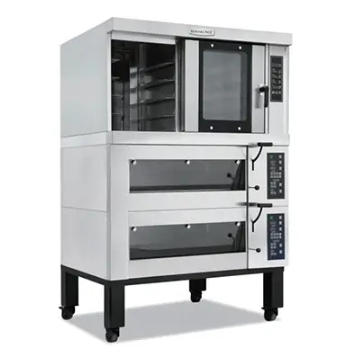
Inflation continues to be a major issue in 2025, driving up raw material and energy prices. The prepared meals market, although expanding, is subject to margin pressures as consumers look for value-for-money. Equipment suppliers are addressing this by creating cost-effective systems, including modular ovens and multi-functional processors, to help lower operating costs. For instance, Marel's compact processing lines achieve 15% savings on energy consumption, making them attractive to cost-conscious processors.
Food Safety and Regulatory Challenges
Food safety comes first, with 48 million Americans affected by foodborne pathogens annually. The FDA's Food Safety Modernization Act (FSMA) still enforces stringent standards, driving demand for hygienic equipment designs. Stainless steel conveyors and clean-in-place (CIP) systems are the new standard, with innovators like Alfa Laval leading the way in contamination control. Kennedy's GRAS reform, mentioned earlier, adds a further layer of regulatory control, which could increase compliance costs but enhance consumer confidence.

Market Consolidation and Competition
The sector is seeing strong consolidation, as highlighted by the takeover of Marel by JBT Corporation in 2025 to form a global food processing solution leader. The consolidation improves economies of scale but concerns about decreased competition. The smaller operators are responding by niche market specialization, for example, equipment for allergen or plant-based product production. The allergen-free processing equipment sector is expected to expand at a CAGR of 5.8% until 2030, fueled by increasing food allergy prevalence.
Consumer-Driven Trends
Health-aware consumers are driving change in the industry, and demand for organic, plant-based, and minimally processed foods is on the rise. The market for organic food processing equipment is predicted to expand at a CAGR of 6.5% by 2032. Low-temperature dryers and gentle mixers are examples of equipment that play an essential role in maintaining nutritional value.

Automation as a Resilience Strategy
Automation is also a primary strategy for managing uncertainty. AI and robotics lower dependence on labor, which is essential in a time of labor shortages and increasing wages. GEA's automated packaging lines, for example, boost throughput by 20% and cut labor expenses. Predictive maintenance, which is driven by IoT, reduces downtime, mitigating supply chain uncertainty. All these technologies help processors sustain profitability in the face of economic adversity.
- Food Industry Executive, “Food Processors and Equipment Manufacturers Face 2025 Uncertainty with Optimism,” May 5, 2025.
- Prepared Foods, “Prepared Meals Market to Reach $305 Billion by 2032,” March 2025.
- Food Technology, “Automation Cuts Labor Costs by 25% in Food Processing,” January 2025.
- Food Safety Magazine, “Ultrasonic Cleaning Systems Boost Food Safety,” April 2025.
- Nutrition Business Journal, “Clean-Label Foods Drive Consumer Choices,” February 2025.
- Food Business News, “JBT-Marel Merger Creates $4 Billion Food Tech Leader,” January 2025.