Picture a bustling market in Addis Ababa, its vibrant stalls overflowing with grains, fruits, and spices, while millions of people around them cannot access one nutritious meal. This paradox is at the heart of the 2025 State of Food Security and Nutrition in the World (SOFI) report, launched by the Food and Agriculture Organization (FAO) and its UN partners on July 28, 2025. Published in Ethiopia's capital—for the first time on African soil—the report offers a sobering snapshot of a world grappling with hunger, malnutrition, and soaring food prices. As the global population inches toward 8.5 billion, the SOFI report amounts to a call to action, stripping bare how inflation, conflict, and climate shocks are placing healthy diets beyond the reach of billions. How did things get this way, and what can the food processing industry do to turn the trend around?

A Sobering Snapshot of Global Hunger
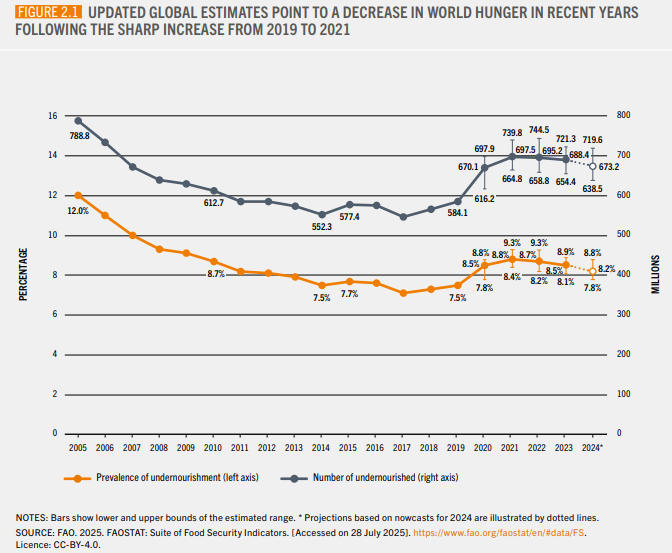
The 2025 SOFI report, written by FAO, IFAD, UNICEF, WFP, and WHO, offers a stark update on global food security. In 2024, global hunger declined slightly, with 8.2% of the world's population—at around 700 million people—living with chronic hunger, down from 8.5% in 2023. But this modest decline conceals a grim reality: 90 million more individuals are hungry than in 2020, and 100 million more than in 2015, when the Sustainable Development Goals (SDGs) were launched. Beyond hunger, 2.3 billion people suffered from moderate or severe food insecurity in 2024, unable to access enough, safe, and nutritious food.
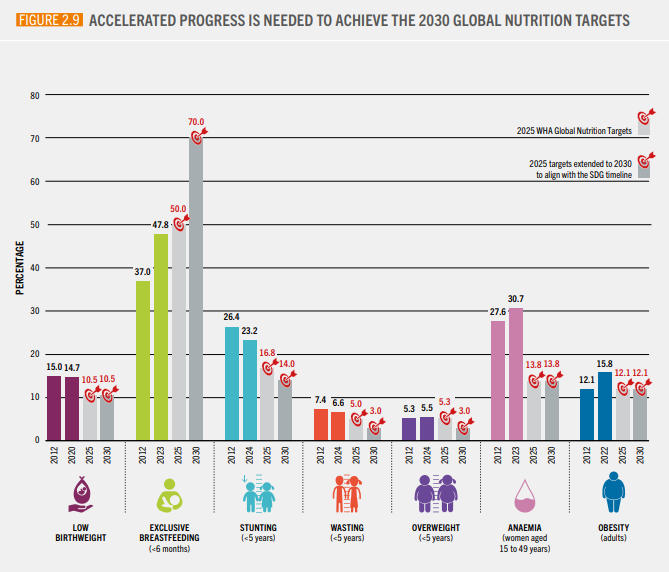
Malnutrition remains complex. While undernutrition has decreased slightly, obesity and micronutrient deficiencies are rising, driven by the global shift towards ultra-processed foods. Alarmingly, 2.6 billion people—nearly a third of the world's population—could not afford a healthy diet in 2024, a figure steady since 2021. The report underscores that women and children are especially affected, with millions not able to obtain diverse, nutrient-rich foods to grow and be healthy.
The Inflation Crisis: Special Focus
This year's SOFI report zooms in on food inflation, a persistent force that is eroding purchasing power around the world. Food price inflation has outpaced general inflation each year since 2020, exposing the fragility of agrifood systems. In low-income countries, where food consumes up to 50% of household incomes, inflation has been devastating. The report further states that high food prices are linked to increased food insecurity and child malnutrition, and a 1% rise in food prices is connected to a 0.3% rise in the incidence of stunting among children under five years old.
The causes of food inflation are multifaceted. Supply chain disruptions, fueled by conflict in Ukraine and the Middle East, have driven up prices for basics like wheat and rice. Extreme weather, from African droughts to Asian floods, has contracted crop yields, squeezing global supplies. Meanwhile, increased energy prices have raised the cost of food production and transportation. The report warns that without policy action by governments in concert, food inflation could erase decades of progress against hunger.
Regional Imbalances and Africa's Struggle
Africa, the venue for the launch of SOFI 2025, continues to be at the center of the hunger crisis. It is home to half of the world's undernourished and 20% of its population was hungry in 2024. Food inflation in sub-Saharan Africa has had the most significant impact on poor households, with basic foods such as maize and sorghum now beyond the reach of millions of people. The report pinpoints Ethiopia as a case study where conflict and drought have driven millions of people from their homes, deepening food insecurity. But Africa also provides grounds for optimism: programs such as Nigeria's investment in agriculture demonstrate how local responses can increase yields and resilience.
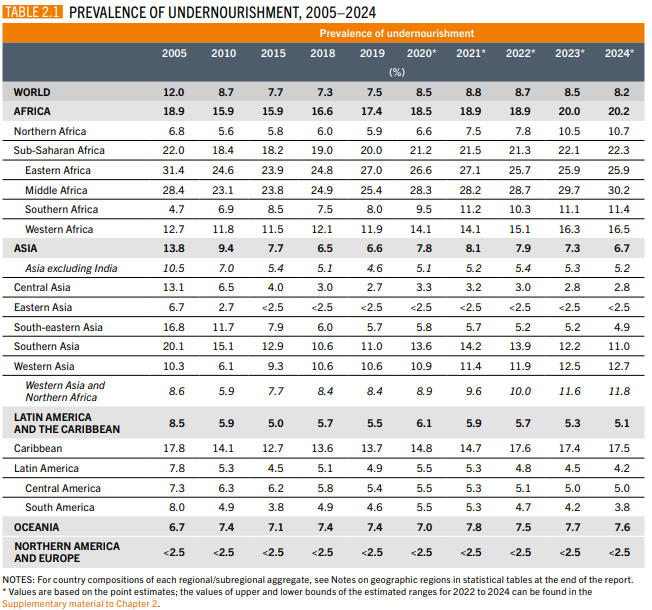
Elsewhere, there has been mixed progress in Asia and Latin America. In Asia, hunger plateaued at 8% in 2024, yet access to healthy diets is a problem for 1.5 billion individuals. Latin America recorded a modest reduction in hunger, yet obesity is on the rise, fueled by affordable, ultra-processed foods. High-income nations, less afflicted by hunger, are experiencing increased malnutrition associated with low dietary diversity, highlighting the universal nature of the crisis.
The Food Processing Industry's Role
The SOFI report urges the transformation of agrifood systems for "better production, better nutrition, a better environment, and a better life." For the food processing industry, this presents a challenge but also an opportunity. The equipment manufacturers can play a leading role here by creating technologies that make food safer, minimize waste, and improve the affordability of nutritious foods. For example, newer preservation systems, such as high-pressure processing (HPP), can help increase the shelf life of fresh fruits and vegetables, making them available to far-flung communities.

Innovations in processing can also tackle malnutrition. Equipment for fortification, which introduces micronutrients such as iron and zinc into staples such as flour and rice, is in great demand in both Africa and Asia. Businesses such as Bühler are ramping up modular fortification units, which allow small-scale processors to cost-effectively produce foods with high nutritional value. At the same time, automation and IoT-connected equipment can streamline production, lowering costs and transferring savings to consumers, a key move in offsetting inflation-induced price increases.
A Call to Global Action
FAO Director-General QU Dongyu, speaking at the launch of SOFI, demanded "urgency, inclusiveness, and action." The report suggests global policy coordination, including opening up trade to stabilize food prices and investing in sustainable agriculture to boost production. It also calls for the protection of vulnerable populations with social safety nets, like school feeding programs, that can leverage food processing technologies to deliver nutritious meals at scale. The food processing industry must be aligned with these goals. By prioritizing sustainability—through waste-reducing technology and energy-efficient machinery—manufacturers can support the SOFI vision of a resilient agrifood system. Partnerships with governments and NGOs, as with Ethiopia's school meal programs, can amplify impact, making processed foods a force for health, not harm.
A Path Forward
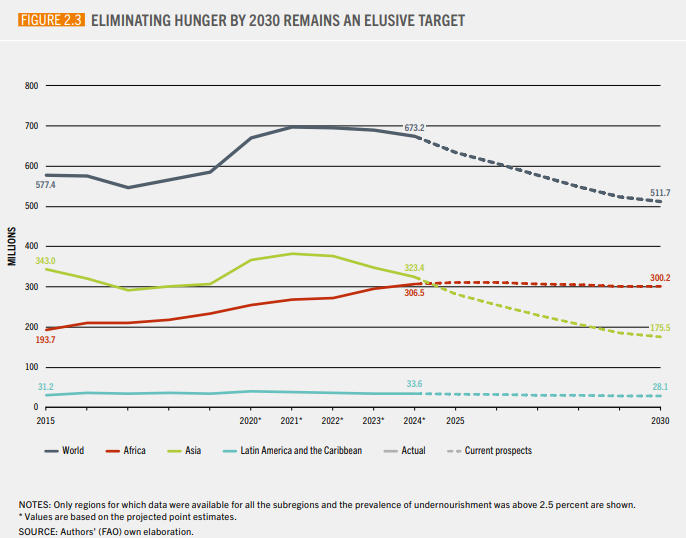
The 2025 SOFI report is a warning, but it's also a roadmap. It shows that things can change—regions like South Asia have contained hunger through targeted policies—but the clock is ticking to meet the SDG goal of zero hunger by 2030. For the food processing industry, the report is a call to innovate, invest, and inspire. By harnessing technology to make healthy diets affordable and accessible, the industry can help build a world where no one goes hungry and every child grows strong. As QU Dongyu said, "The way forward requires determination." The question is: will we rise to the challenge?