FoodTechX News | Food Processing Technology & Research
Plum puree is attracting increasing interest as a versatile fruit ingredient for beverages, fruit preparations, sauces, dairy and plant-based products, bakery applications, and other processed-food categories. However, one technical challenge can significantly affect the quality and commercial appeal of plum puree: rapid enzymatic browning during crushing and pulping.
A new study published in Food Chemistry provides useful insights into how anti-browning treatments and subsequent preservation technologies can influence the color, aroma, and chemical composition of plum puree.
The study, "Quality changes in plum puree based on anti-Browning treatment: Nonvolatile and volatile compounds analysis", was conducted by Lingxiao Tang, Duo Rao, Guowen Li, Fengjuan Liu, and Zhenzhen Xu. Published in Food Chemistry, Volume 524, Article 150198, the research systematically evaluated ascorbic acid (VC), steam blanching, and their combination as anti-browning treatments. The researchers then compared high-pressure processing (HPP) and pasteurization after the most effective anti-browning pretreatment.
The findings are particularly relevant to food processors because they demonstrate that process selection can influence more than visual appearance. Different processing combinations can also affect nonvolatile compounds and volatile compounds associated with the aroma and sensory characteristics of the finished puree.
Why Is Browning a Major Challenge in Plum Puree Processing?
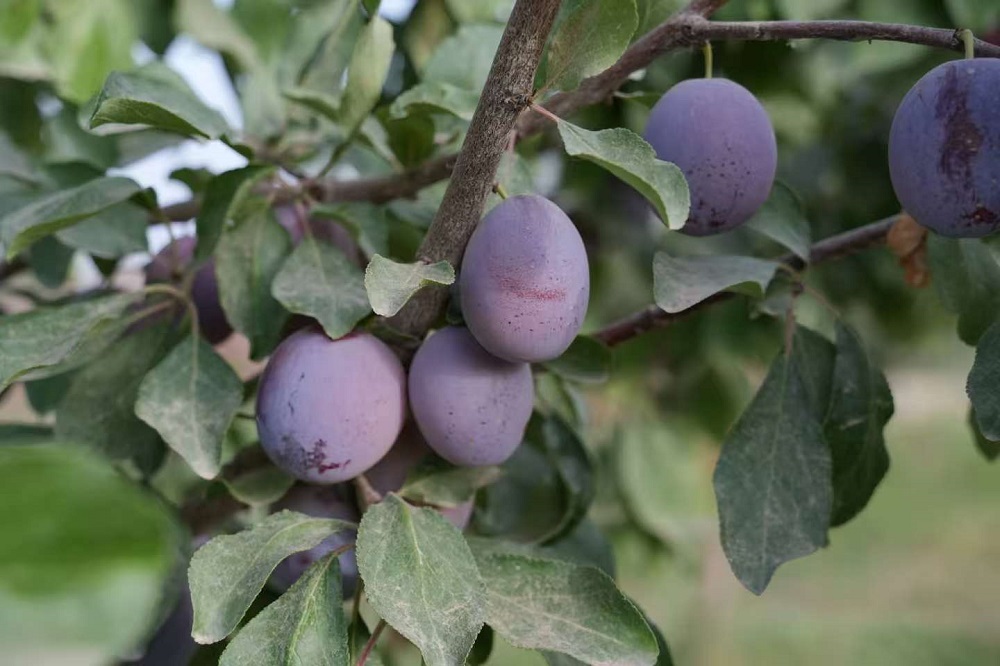
Plum (Prunus domestica L.) contains phenolic compounds that can participate in enzymatic browning reactions.
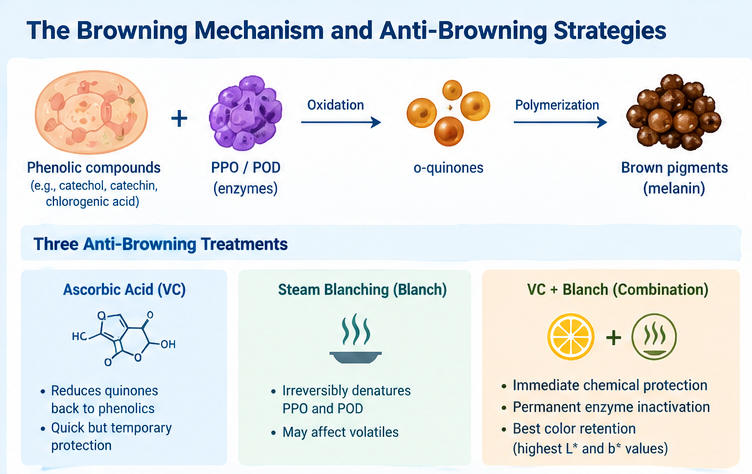
During crushing and pulping, the cellular structure of the fruit is disrupted. This increases contact between endogenous enzymes, phenolic substrates, and oxygen, accelerating oxidation reactions. As a result, freshly processed plum puree can rapidly change from a relatively bright appearance toward darker brown tones.
For a food processor, this is more than a cosmetic problem.
Color is one of the first quality attributes noticed by consumers and can influence perceptions of freshness and product quality. At the same time, processing-induced chemical changes may also affect aroma and other characteristics of the puree.
Traditional approaches to controlling enzymatic browning include enzyme inactivation through heat, the use of antioxidants such as ascorbic acid, pH adjustment, and combinations of different interventions.
The new Food Chemistry study focuses specifically on what happens when these approaches are evaluated within an actual plum puree system rather than considering anti-browning mechanisms in isolation.
Comparing Ascorbic Acid, Steam Blanching and Their Combination
The researchers evaluated three anti-browning treatments:
- Ascorbic acid (VC)
- Steam blanching (Blanch)
- Combined ascorbic acid and steam blanching (VC + Blanch)
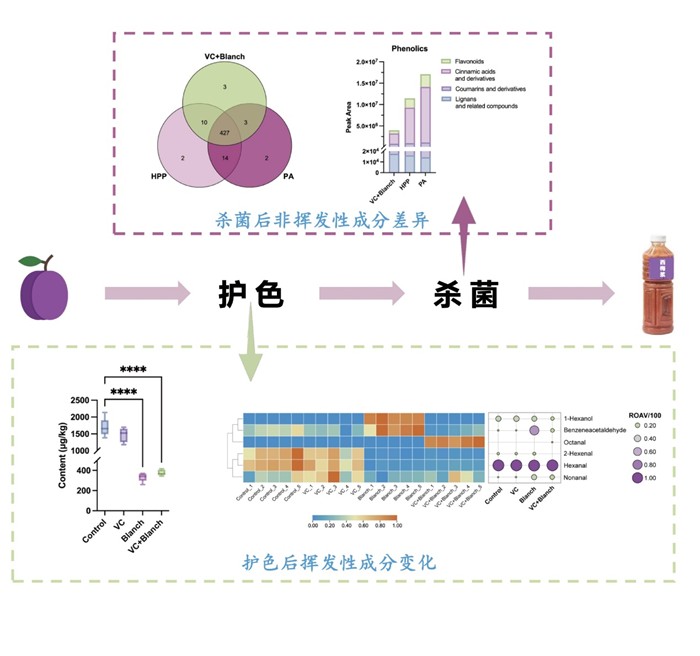
The results showed that the VC + Blanch treatment was the most effective of the tested anti-browning treatments.
Compared with the other treatments, the combination significantly reduced the browning index and better maintained color characteristics, including higher lightness (L) and yellowness (b) values.
This finding is important from an industrial process-development perspective because it demonstrates the potential value of combining different mechanisms rather than relying on a single anti-browning intervention.
However, the study also found that the interaction between treatments was more complicated than a simple additive effect.
The researchers reported that the combined treatment uniquely regulated the profile of nonvolatile compounds through antagonistic, synergistic, and protective mechanisms.
In other words, combining two processing interventions does not necessarily mean that their individual effects simply add together.
The interaction between treatments and food components can change the resulting chemical profile in ways that need to be evaluated experimentally.

Why the Combined Treatment Matters
From a process-engineering perspective, the VC + Blanch result illustrates an important principle: anti-browning should be considered as part of an integrated processing sequence rather than as an isolated operation.
Ascorbic acid and blanching operate through different mechanisms. Combining them can provide a different overall effect on the puree than either treatment alone.
The study therefore provides useful evidence for manufacturers considering multi-step processing strategies for plum puree.
At the same time, the researchers found that blanching alone could significantly reduce total volatile content and change the volatile composition. This is important because controlling browning effectively does not automatically mean that the resulting product will retain all of its desirable fresh-aroma characteristics.
For processors, the objective is therefore not simply:
“How do we stop the puree from turning brown?”
A more useful question is:
“How do we control browning while maintaining the quality characteristics that matter for the final product?”
That broader question leads directly to the study's second major comparison.
HPP vs. Pasteurization: Different Effects on Product Quality
After evaluating the anti-browning treatments, the researchers compared two preservation technologies:
- Pasteurization (PA)
- High-pressure processing (HPP)
Both technologies can play important roles in food processing, but they affect food matrices differently.
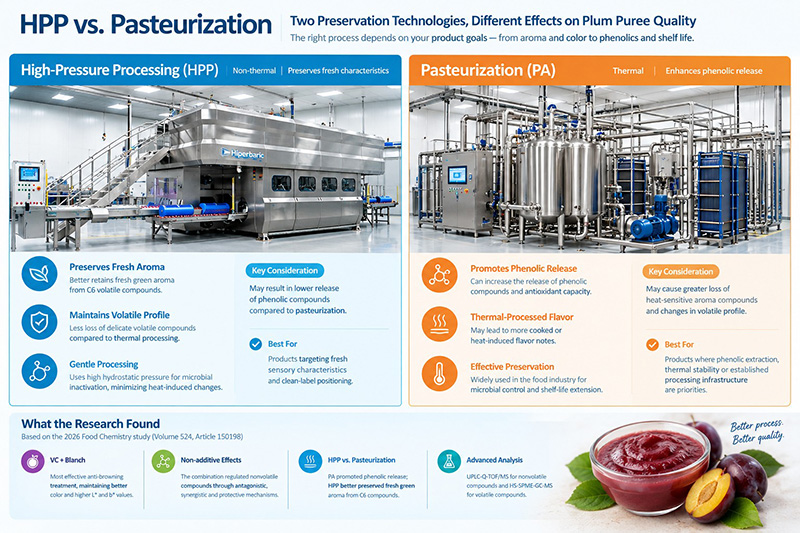
The study found that pasteurization promoted the release of phenolic compounds, while HPP better preserved the fresh green aroma associated with C6 volatile compounds. The researchers also observed more thermal-processed flavor characteristics following pasteurization.
This creates an interesting process-selection trade-off.
Pasteurization: A Thermal Processing Route
Thermal processing remains one of the most widely used approaches for food preservation.
In the plum puree study, pasteurization was associated with greater phenolic release. This may be relevant for product developers who are interested in the chemical composition of fruit-based products.
However, the study also found that pasteurization produced more thermal-processed flavor characteristics.
For products where a cooked or processed fruit profile is acceptable—or where thermal processing provides other important manufacturing advantages—this may not necessarily be a disadvantage.
For products positioned around fresh fruit characteristics, however, aroma preservation may receive greater priority.
HPP: Preserving Fresh Aroma Characteristics
High-pressure processing offers a different processing approach.
Rather than relying primarily on heat, HPP uses high hydrostatic pressure as the principal processing mechanism. One of the reasons HPP has attracted interest in fruit and beverage applications is its potential to preserve sensory characteristics that can be affected by intensive thermal treatment.
In this particular plum puree study, HPP better preserved the fresh green aroma associated with C6 volatile compounds.
This finding does not mean that HPP is universally superior to pasteurization.
Instead, it demonstrates that the preferred preservation technology depends on the quality objectives of the product.
A processor developing a premium fruit puree may place a high priority on fresh aroma. Another manufacturer may place greater emphasis on established thermal-processing infrastructure, processing economics, throughput, or other production requirements.
The appropriate choice therefore needs to be evaluated as part of the complete process and product strategy.
Advanced Analytical Methods Reveal More Than Color Changes
Another important aspect of the research is the analytical methodology.
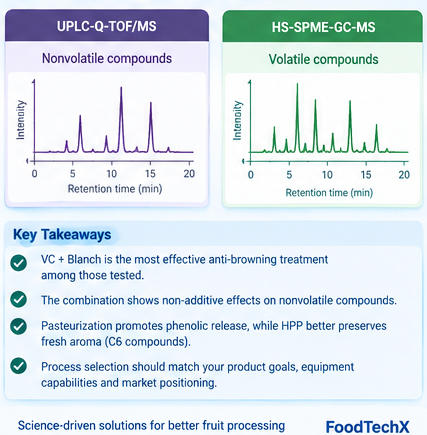
The researchers used UPLC-Q-TOF/MS to investigate nonvolatile compounds and HS-SPME-GC-MS to analyze volatile compounds.
These techniques allow researchers to examine changes in the chemical profile of a food product at a much deeper level than visual color measurement alone.
This is increasingly important in modern food processing.
Two products may have similar color measurements while having significantly different volatile profiles. Conversely, a processing method may produce desirable changes in one group of compounds while negatively affecting another.
For R&D teams, this means that process optimization can increasingly move beyond simple measurements such as color, pH, or total soluble solids toward more comprehensive chemical and sensory analysis.
The study's use of both nonvolatile and volatile compound analysis demonstrates the value of looking at processing effects from multiple dimensions.
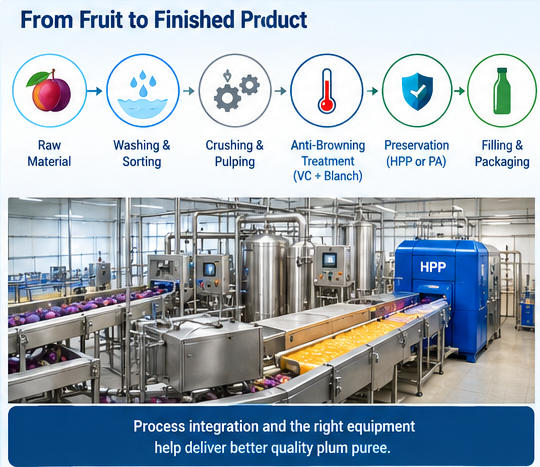
What Does This Mean for Plum Puree Production Lines?
For equipment manufacturers, food processors, and engineering teams, the research has a practical implication: equipment selection should follow the desired process rather than the other way around.
A commercial plum puree line may involve multiple interconnected operations, including:
Fruit receiving → washing → sorting → preparation → crushing/pulping → anti-browning treatment → further processing → preservation → filling → packaging → storage
Each operation can influence the next.
For example, pulping determines how quickly enzymes and substrates interact. Anti-browning treatment influences color stability and chemical composition. The subsequent preservation process can influence aroma and other quality characteristics.
This means that purchasing a pulper, blancher, pasteurizer, or HPP system independently may not produce the optimal overall result.
Instead, the complete process should be considered as an integrated system.
Depending on the product and production requirements, equipment planning may involve:
- Fruit washing and sorting systems;
- Fruit crushers and pulpers;
- Steam blanching equipment;
- Ascorbic-acid dosing and mixing systems;
- Pumps and hygienic transfer systems;
- Pasteurization systems;
- HPP processing equipment;
- Homogenization systems where required;
- Aseptic or hygienic filling systems;
- CIP cleaning systems;
- Packaging equipment;
- Process monitoring and quality-control systems.
The exact configuration should be determined according to the raw material, target capacity, product formulation, preservation requirements, packaging format, factory conditions, and applicable regulations.
Choosing HPP or Pasteurization Requires a Product-Specific Approach
One of the most useful lessons from this research is that there is no single processing technology that automatically maximizes every quality attribute.
The study showed different effects:
| Processing approach | Key observation in the study |
|---|---|
| VC | Anti-browning treatment |
| Steam Blanching | Anti-browning treatment, with effects on volatile compounds |
| VC + Blanch | Best tested anti-browning treatment; better color retention |
| Pasteurization | Promoted phenolic release; produced more thermal-processed flavor |
| HPP | Better preserved fresh green aroma from C6 volatile compounds |
These findings can help food processors frame the technology-selection question more effectively.
Instead of asking:
“Is HPP better than pasteurization?”
a more useful engineering question is:
“Which process provides the best balance of quality, safety, shelf-life, throughput, investment, operating cost, and market positioning for this specific product?”
That is the question that ultimately determines the appropriate equipment configuration.
Broader Implications for Fruit Processing
Although the study focuses on plum puree, the underlying concept is relevant to broader fruit-processing research.
Many fruits contain phenolic compounds and endogenous enzymes that can contribute to enzymatic browning after cutting, crushing, or pulping.
The study demonstrates that combining different interventions can create non-additive effects and that downstream preservation technology can further influence the final product profile.
However, processors should not automatically assume that the exact VC + Blanch conditions demonstrated for plum puree can be transferred directly to apples, pears, peaches, or other fruits.
Different raw materials have different enzyme activities, phenolic profiles, acidity, tissue structures, and processing characteristics.
Therefore, the study is best viewed as a useful framework for process development, rather than a universal processing recipe for every fruit puree.
What Food Manufacturers Can Learn From the Study
For food manufacturers and product-development teams, several practical lessons stand out.
1. Control Browning Early
Browning begins rapidly when fruit tissue is disrupted. Anti-browning strategies should therefore be considered early in the process design.
2. Evaluate Combined Treatments
The VC + Blanch result demonstrates that combined interventions can have non-additive effects. Their performance should be validated under actual processing conditions.
3. Evaluate Aroma as Well as Color
A treatment that produces excellent color stability may also affect volatile compounds. Quality evaluation should therefore include sensory and aroma considerations where relevant.
4. Select Preservation Technology According to Product Positioning
If fresh aroma is a major product attribute, the potential advantages of HPP may deserve particular consideration. If other factors favor thermal processing, pasteurization may remain an appropriate option.
5. Design the Entire Processing Line
The best result is not necessarily achieved by selecting the best individual machine. The interaction between unit operations is often more important.
FoodTechX Perspective
For FoodTechX, this research illustrates a broader principle in modern food factory development:
Food processing equipment should be selected as part of a process system, not as isolated machines.
A fruit puree project may require coordination among raw-material handling, pulping, anti-browning treatment, thermal or non-thermal preservation, filling, packaging, cleaning, utilities, and quality control.
The 2026 Food Chemistry study provides a useful example of why these decisions should be made with the final product characteristics in mind.
The research found that the combined VC + Blanch treatment was the most effective of the tested anti-browning approaches for plum puree, while subsequent HPP and pasteurization produced different effects on phenolic release and aroma characteristics.
For manufacturers considering a new plum puree line or upgrading an existing fruit-processing facility, the next step is not simply to select a pasteurizer or HPP system. It is to define the desired product profile and then design the process sequence and equipment configuration around that objective.
FoodTechX connects international food and beverage businesses with equipment manufacturers, technical resources, and project support for food-processing applications. The appropriate equipment and process configuration should always be determined according to the specific product, production capacity, site conditions, technical requirements, and applicable regulations.
Conclusion
The new study published in Food Chemistry provides valuable evidence that anti-browning treatment and preservation technology can have interconnected effects on the quality of plum puree.
Among the treatments evaluated, VC + Blanch provided the strongest browning control and better maintained color quality. The study also demonstrated that the combined treatment produced non-additive effects on nonvolatile compounds.
After this pretreatment, pasteurization promoted phenolic release, while HPP better preserved fresh green aroma characteristics, and pasteurization produced more thermal-processed flavor.
The broader lesson for food manufacturers is that processing optimization should consider the entire production system.
Color, aroma, chemical composition, preservation requirements, equipment investment, operating conditions, and the intended market position all need to be considered together.
For modern fruit-processing facilities, the goal is not simply to prevent browning or extend shelf life. It is to develop a processing system capable of delivering the specific quality profile that the finished product and its target market require.
Original Research
Tang, L., Rao, D., Li, G., Liu, F., & Xu, Z. (2026). Quality changes in plum puree based on anti-Browning treatment: Nonvolatile and volatile compounds analysis. Food Chemistry, 524, 150198.
DOI: 10.1016/j.foodchem.2026.150198
This FoodTechX article is an editorial summary of published scientific research. It is intended for industry information and does not replace the original research paper, product-specific process validation, food-safety validation, or professional engineering advice.