Ghana's vegetable sector is undergoing a promising transformation, driven by high-performing tomato varieties that are dramatically improving productivity and addressing long-standing supply chain challenges.
Through the Technologies for African Agricultural Transformation (TAAT) initiative—supported by the African Development Bank and implemented in partnership with Ghana's Council for Scientific and Industrial Research–Crop Research Institute (CSIR-CRI) and the World Vegetable Centre—the TAAT Vegetable Compact has introduced disease-resistant, high-yield tomato varieties in the Volta Region's Agortime-Ziope District.
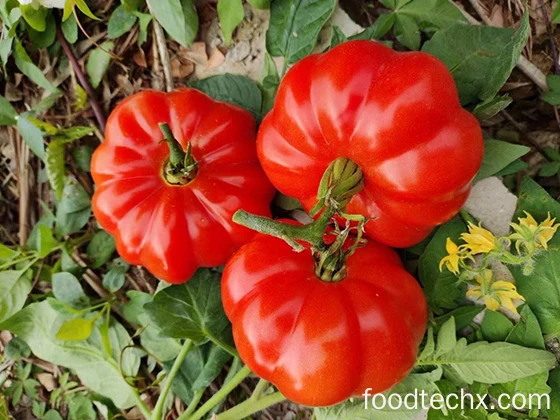
Field trials have shown these improved varieties, including CRI Kwabena and Copia, achieving yields of up to 20 tons per hectare—more than double Ghana's national average of 7–10 tons per hectare. This breakthrough not only enhances farmer profitability but also delivers more consistent and higher-quality raw materials to downstream agribusinesses.
Key advantages of these varieties include extended shelf life and better transport durability, which significantly cut post-harvest losses—a major issue in Ghana's fresh produce supply chain. District Agriculture Director Mawuli Abusah highlighted how reduced spoilage during transit allows smallholder farmers to more reliably reach urban markets, leading to higher incomes and steadier supply flows.
For food processors, the benefits are even more direct. Local processor Kuatudzo Esther Deladem noted that the new tomatoes have lower water content, resulting in greater processing efficiency, reduced energy use, lower production costs, and superior end-product quality in applications such as sauces, purees, and canned goods. She strongly encourages wider adoption among farmers to minimize community-level waste and strengthen the overall value chain.
The TAAT approach fosters sustainable seed access by linking farmers directly with commercial seed producers, reducing reliance on imported varieties and building resilient local networks. Farmers involved in the trials reported stronger market demand and improved financial returns, though many expressed a need for government subsidies to make the enhanced seeds more affordable.

Dr. Michael Kwabena Osei, Principal Research Scientist at CSIR-CRI, outlined ambitions to move from demonstration plots to nationwide scaling. These varieties show consistent performance across diverse conditions and offer enhanced resistance to common diseases, laying a strong foundation for long-term sector growth.
TAAT Vegetable Compact Coordinator Dr. Mathieu Ayenan emphasized that this model promotes more sustainable and profitable agribusiness practices, simultaneously improving production resilience, supply reliability, and food and nutrition security.
Wider adoption holds significant promise for the food processing industry:
- More reliable raw material supply — Higher yields and lower losses help smooth out seasonal fluctuations and price volatility.
- Improved processing performance — Varieties suited to industrial handling optimize equipment utilization in washing, sorting, peeling, concentration, and filling lines.
- Opportunities for value addition — Better raw material quality supports development of premium products like tomato paste, dried tomatoes, juices, and exports to regional and global markets.
- Growing domestic demand — Nutrition education efforts within the program are increasing local consumption of vegetables such as tomatoes, okra, and amaranth, expanding market potential for processors.
If you're a processor, factory operator, or equipment supplier looking to capitalize on more stable, higher-quality tomato supplies, explore our platform's listings or contact us to discuss tailored solutions for your production needs.
Source reference: This article is a rewritten summary and analysis based on the original TAAT report. Original source: https://taat-africa.org/news/taat-vetted-vegetable-varieties-double-ghanas-tomato-yields-to-20-tons-per-hectare/