Recently, we came across a very representative project: the government of an African country, based on a $200 million loan from an international financial institution , publicly tendered for 6 provinces, 7 cities, 7 polytechnics, and 8 agricultural product processing and agricultural machinery training lines in the country.
The direction is excellent—honey, coffee, tea, dairy products, spices, and agricultural machinery are all industries in Africa with resources, markets, and employment opportunities. Transforming local agricultural products into skills that can be taught, practiced, and industrialized is the kind of vocational education investment that many developing countries desperately need.
However, upon reviewing the tender documents, typical problems emerged: no design institute prepared the overall process drawings, and the process was mainly assembled from the quotations of various suppliers; the technical parameters were either unrealistically high or too broad to be accepted; the simulation software only had a concept and no functional list; the budget was unclear; large suppliers looked down on the cost of a single line, and small suppliers had weak cross-disciplinary integration capabilities.
For these types of projects, the competition isn't about "who has the cheapest machines," but rather who can integrate processes, equipment, laboratories, software, training, warranties, on-site maintenance, and cross-border delivery into a cohesive chain .
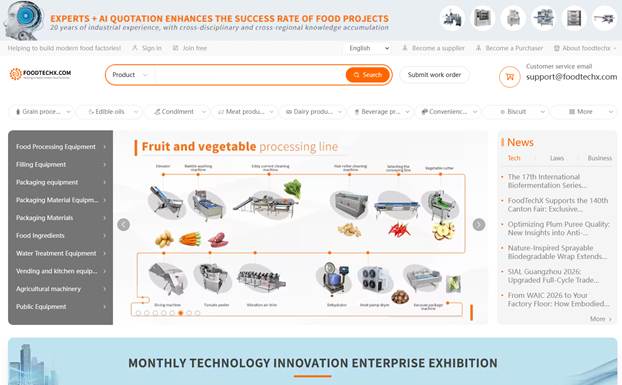
(Foodtechx platform homepage)
I. Five most typical problems in the bidding documents
Question 1: Without a design institute, how to build a training line by "combining quotes"?
The tender documents did not commission a design institute to conduct an overall process design; instead, they primarily relied on combining the quotations from various suppliers. The result was:
- The processing equipment for honey is not clearly defined by variety – the filtration, crystallization, and sterilization processes for different honey sources vary greatly, and a single machine cannot handle them all.
- The bidder lacks sufficient understanding of the processing techniques for spices, coffee, tea, and dairy products, and must supplement the product offerings with a large number of products to complete the training line.
- If the specifications are not properly matched and the equipment is not compatible, the completed project may "look complete, but all of them will malfunction in use."
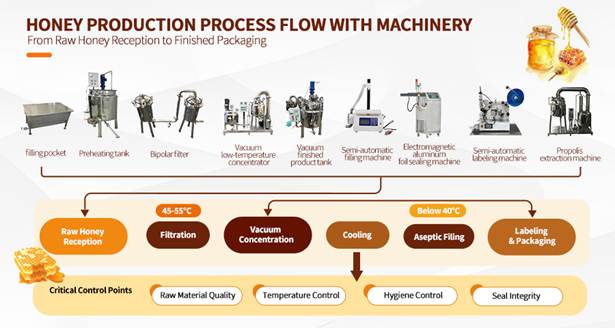
(Diagram of honey thread making process)
Question 2: The technical parameters are comprehensive but lack detail.
The bidding party wanted to achieve full category and full scenario coverage in one go, which was a good starting point, but problems arose when it came to the parameters:
- A balance with an accuracy of 1/1,000,000 is sufficient for daily teaching and routine testing in the training room; a balance with an accuracy of 1/1,000,000 requires extremely high standards for environment, shock resistance, and calibration, and would likely end up gathering dust if purchased.
- Chromatographs, nitrogen analyzers, moisture analyzers, refractometers, pesticide residue analyzers —only the equipment names are listed, without specifying the objects to be tested, the detection range, the detection limit, or the sample pretreatment requirements. Suppliers can submit any model number to win the bid, but no one cares whether it is usable or how well it works.
- cheese, butter, propolis, royal jelly, and raw bean processing are scarce or even nonexistent, leaving bidders unsure of which equipment to equip, what production capacity to allocate, or what level of instruction to provide.

(Layout plan of Orff coffee fresh fruit processing)
Question 3: The simulation software only has a concept and lacks an acceptable list of features.
The tender document mentions "digital twins, large-scale models, question banks, examinations, and tiered management," but only provides a general description without specific requirements.
- What are the modeling objects? Equipment level, production line level, factory level?
- What job categories does the question bank cover? How many questions are there? What are the difficulty levels?
- Is the examination system a theoretical test or a virtual practical test? How are the scores managed?
- Is digital twin a real-time data interface or a teaching demonstration?
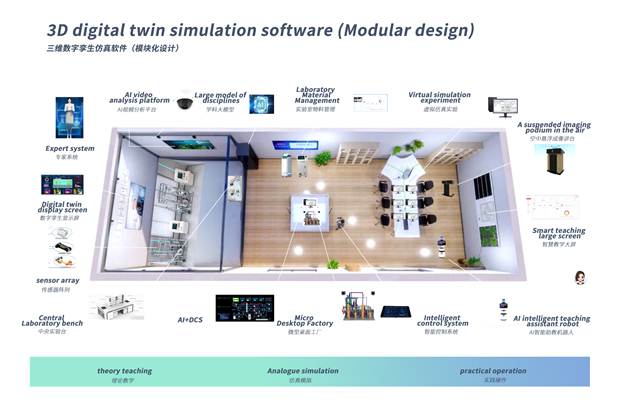
(Scene diagram of the training software)
Without these details, software vendors are left to "play it by themselves," and the final product may not be what the school wants.
Question 4: Unclear budget, suppliers "tailor their services to the specific needs"
Without a clear budget, large suppliers are hesitant to participate due to concerns about low single-line construction costs, thin profit margins, and high service costs. Smaller suppliers, on the other hand, are willing to participate but have limited interdisciplinary knowledge and poor supply chain integration capabilities, resulting in cobbled-together proposals.
Question 5: Significant Information Gap in Cross-Border Cooperation
Domestic companies understand local policies, site conditions, and training needs, but are unfamiliar with the Chinese food equipment ecosystem; Chinese suppliers understand equipment, processes, and prices, but lack awareness of local installation conditions, operational levels, and after-sales logistics in Africa. Without deep cooperation between the two sides, the project is unlikely to be successfully implemented.
II. Why can't these types of projects rely solely on "competing with supplier quotes"?
Because the training line is not simply about "buying a few machines and putting them there".
A honey training line should allow students to go through the entire process from receiving raw honey, melting crystals, filtering, sterilizing, and filling, to laboratory testing for hydroxymethylfurfural, moisture, microorganisms, and sensory evaluation; a coffee training line should teach the entire process from fresh fruit flotation, peeling, fermentation, and drying, to green bean color sorting, roasting, grinding, and cupping; an agricultural machinery training line should disassemble and reassemble the engine's fuel supply/cooling/lubrication/starting system and the tractor's transmission/suspension/hydraulic/electronic control system.
What's needed is process design capability , not equipment trading capability.
First, define the process flow; then the equipment list; then the laboratory; then the software and training; and only then should you discuss pricing and delivery. Reversing this order will inevitably lead to project problems.
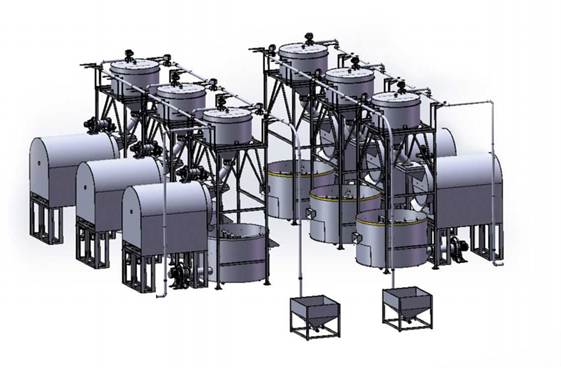
(3D diagram of raw soybean processing)
III. What can FoodTechX do: It's not an "intermediary," but the main platform for practical training chains.
FoodTechX is positioned as Helping to Build Modern Food Factories – a platform for modern food factory construction and supply chain collaboration. The parent company has over 20 years of experience in food factory construction, possessing a comprehensive understanding of the processes across various scenarios and extensive practical experience.
When faced with such transnational vocational education programs, our value lies not in "buying you a filling machine," but in four things:
1. Process Completion: Fill in the gaps in the tender document that are "not clearly stated" to create a feasible solution.
- Differences in processing honey from different nectar sources, two-stage processing of coffee cherries and green beans, different temperature control curves for green and black tea, small-scale and pilot-scale parameters for cheese and butter, and the disassembly and assembly logic of agricultural machinery subsystems—the platform team can supplement process descriptions and equipment lists in a way that is "teaching-demonstrable and industry-transformable."
- For anything not clearly stated in the tender documents, we will assist the owner in clarifying it; for anything that is set too high in the tender documents, we will provide a reasonable alternative.
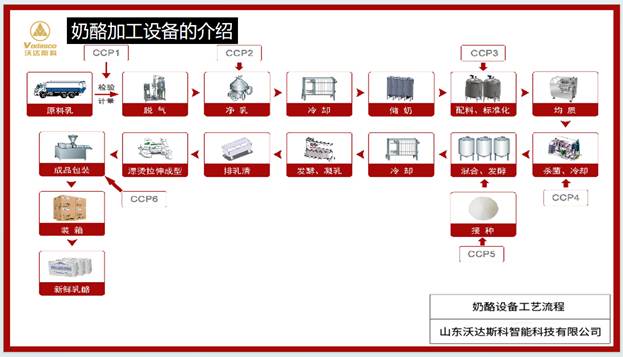
(Cheese processing line)
2. Supply chain breadth: 1000+ targeted suppliers, covering high/medium/low-end markets.
The platform has already listed over 1,000 vertical suppliers in the food industry :
- Food processing equipment, filling/packaging/labeling/palletizing
- Water treatment, CIP, sterilization, homogenization, separation
- Laboratory chromatography/nitrogen determination/moisture content/refractive index/pesticide residues/microorganisms
- Packaging materials, molds, valves and pumps
- Agricultural machinery and engine subsystem
- Simulation software, industrial internet, teaching management system
- Design institutes, consulting, certification, logistics, finance, training
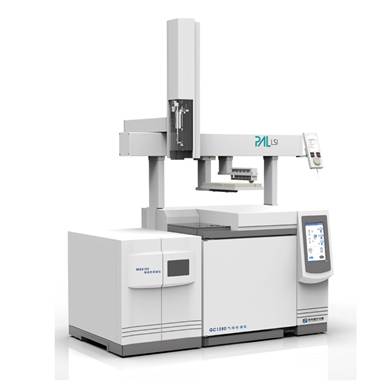
(Gas Chromatography-Mass Spectrometry)
If a training line is missing anything, the platform can quickly assemble a system; if a supplier for a particular category is not capable enough, the platform's operations team will develop new suppliers to avoid "one supplier failing and the whole line stopping".
3. Cross-border delivery: Expertise in banking projects and the overseas expansion of Chinese supply chains.
Bank loan projects typically emphasize qualified source countries, transparent procurement, delivery and acceptance, training, and after-sales service. FoodTechX, being export-oriented, is familiar with:
- Multiple entities jointly submit bids, meeting the requirement of multiple supplier entities to submit bids as stipulated in the tender documents.
- Chinese factories + domestic agents: division of labor and cooperation
- English technical documents, performance records, certification materials
- Three-year warranty, three-year on-site maintenance plan
- Sea freight / Customs clearance / Installation and commissioning / Operation training
- Teacher training, maintenance manual, spare parts list
4. Think one step further than bidding: security, upgrades, and the entire lifecycle.
The training lab is not an exhibition hall. Students use steam, knives, compressors, acid and alkali reagents, and gas-fired baking equipment, which increases the risk of safety accidents. We will consider this in our plan.
- Mechanical protection, emergency stop, interlocking
- High temperature and high pressure, steam, electrical, and refrigerant risks
- Laboratory ventilation, waste liquid, hazardous chemicals
- Subsequent updates to the software's question bank, model iterations, and digital twin expansions.
- Teacher certification training and assessment closed loop
- 3-5 Year Spare Parts Strategy and Localized Maintenance Capabilities
Fourth, the correct approach to these types of vocational education programs in Africa is through "platform-based chaining."
If you only look for one equipment trader: he may know how to buy and sell, but he may not know how to make cheese.
If you only look for a single large manufacturer: they understand their own machine, but they may not be willing to be the overall coordinator for 7 schools and 8 lines.
If you only look for a domestic agent: they may understand the local procedures, but they may not understand the Chinese food equipment ecosystem.
FoodTechX's role is to integrate "process design capabilities + China's food equipment supply chain + laboratory instruments + vocational education simulation software + cross-border delivery services" into a unified whole.
For the government and educational institutions: fewer pitfalls, less rework, and truly usable training lines.
For Chinese suppliers, there's no need to travel to Africa to find connections; the platform provides scenarios, leads, compliance documents, and opportunities for joint bidding.
To sum it up in one sentence
The construction of agricultural product processing colleges in African vocational colleges is not about "buying equipment," but about transforming the country's agricultural characteristics into industrial capabilities that can be taught, employed, and exported .
FoodTechX is ready:
✅ Process Completion
✅ Multi-supplier chain
✅ Collaboration between laboratory and simulation software
✅ Bank project documents and after-sales solutions
✅ Three-year warranty + three-year on-site maintenance
✅ Security and Prevention and Full Lifecycle Management
Governments, polytechnics, and vocational education project teams from all countries are welcome to visit foodtechx.com ;
We also welcome capable suppliers of food equipment, laboratory instruments, agricultural machinery, and industrial software to join the platform and work together to transform China's food manufacturing capabilities into global vocational education and training capabilities.
We not only provide equipment, but we also build supply chains to create "training factories that are ready to operate."