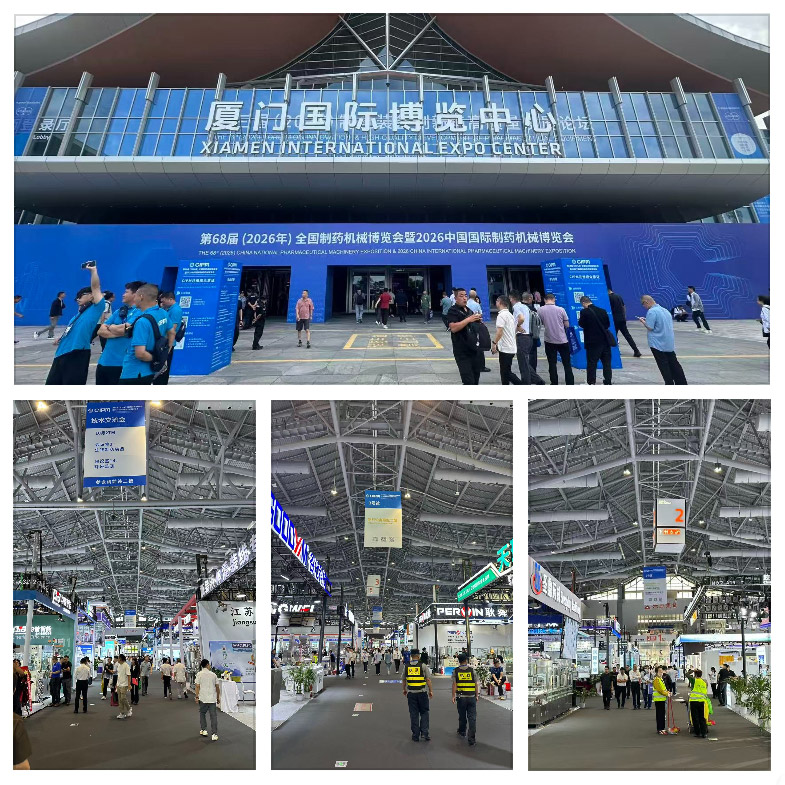
In late October, the sea breeze in Xiamen still carried the lingering warmth of summer. At the Xiamen International Expo Center, the giant blue CIPM logo on the plaza was packed with people taking photos. The three-day 68th National Pharmaceutical Machinery Exhibition and the 2026 China International Pharmaceutical Machinery Exhibition concluded here: 230,000 square meters of exhibition space, over 13,000 booths, and more than 1,800 companies from nearly 30 countries and regions , ranging from the International Pavilion and Biopharmaceutical Zone to API equipment, formulation equipment, packaging, testing, laboratory, and water systems.
FoodTechX, which has long focused on food factory construction, equipment supply chain and industrial technology development, gave us a profound feeling after visiting the exhibition for three days: the technological boundaries between food equipment and pharmaceutical equipment are gradually becoming blurred, and the precision, hygiene design, closed system and quality verification capabilities accumulated by the pharmaceutical industry are providing new technical references for the upgrading of food factories.
Our previous research on the peptide industry supply chain provided a clearer perspective for this exhibition. This article focuses on three aspects: the commonalities in technology between food and pharmaceutical equipment, the application inspiration from Dongfulong's flexible tableting equipment, and the potential value of Lishui Technology's separation and purification technology for the functional food ingredients industry.
I. Food and Pharmaceuticals: Sharing a set of engineering languages
Although food and pharmaceutical companies follow different regulations and quality management systems, they share many common requirements at the equipment engineering level:
- Unit operations : separation, formulation, filling, packaging, testing, experimentation, purification, and software systems. The product tree of FoodTechX and the exhibition area map of the pharmaceutical machinery exhibition are superimposed, with a very high degree of overlap.
- Hygienic design : 316L stainless steel contact surfaces, Ra≤0.8μm (0.4μm EP for some high-cleanliness applications), no dead corners, self-draining and hygienic connection structure are all key considerations for dairy, beverage and pharmaceutical production equipment.
- CIP/SIP systems , or in-situ cleaning and sterilization technologies, provide a foundation for reducing equipment disassembly and lowering the risk of cross-contamination. The food industry can refer to hygiene design standards such as 3-A and EHEDG, and combine them with HACCP and ISO22000 management systems; the pharmaceutical industry should implement ASME BPE standards at the hardware level and follow GMP full lifecycle validation at the system level.
- Quality Validation and Data Traceability : Food processing plants are gradually moving from traditional cleaning effectiveness checks to standardized cleaning validation, process documentation, and quality traceability. The pharmaceutical industry has accumulated mature engineering experience in equipment validation, residue control, and data integrity, and the FDA 21 CFR Part 11 data integrity specification is deeply embedded in equipment control system design.
It is worth noting that upgrading food equipment should not be simply understood as adopting higher-level pharmaceutical equipment. Instead, it should involve selecting appropriate technology and engineering standards based on the characteristics of food products, process requirements, and return on investment.
Especially in the fields of infant formula, special medical foods, probiotics, functional ingredients and plant extracts , batch consistency, contamination control and production traceability are becoming increasingly important.
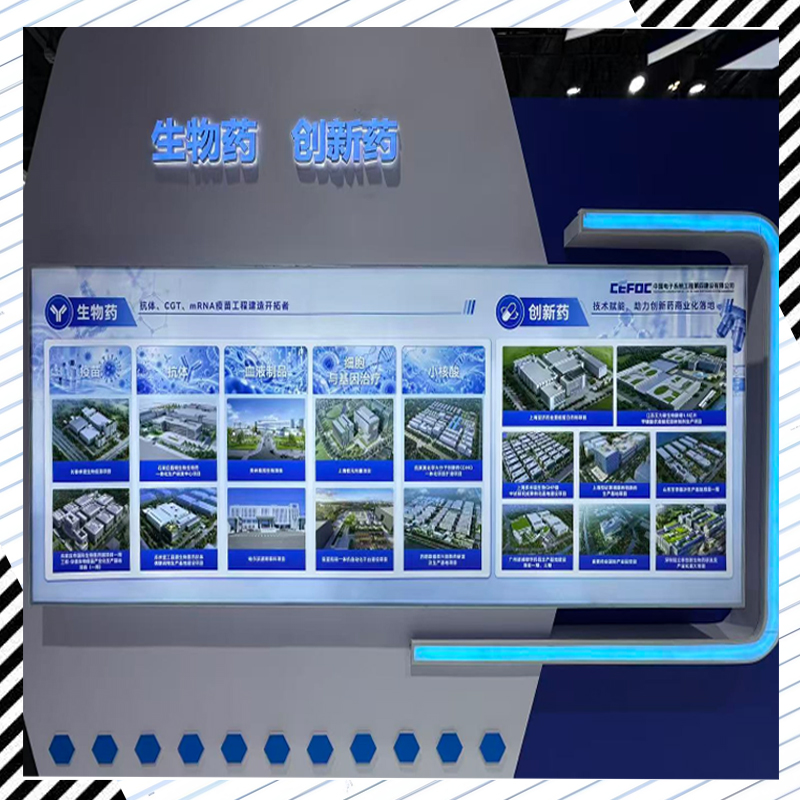
The fact that companies like Xingdeke, which serve both the food and pharmaceutical industries, and Dongfulong's Food Engineering and Equipment Division both demonstrate the trend of technological integration between the two industries.
II. Dongfulong T10: Flexible manufacturing is changing the way we select equipment.
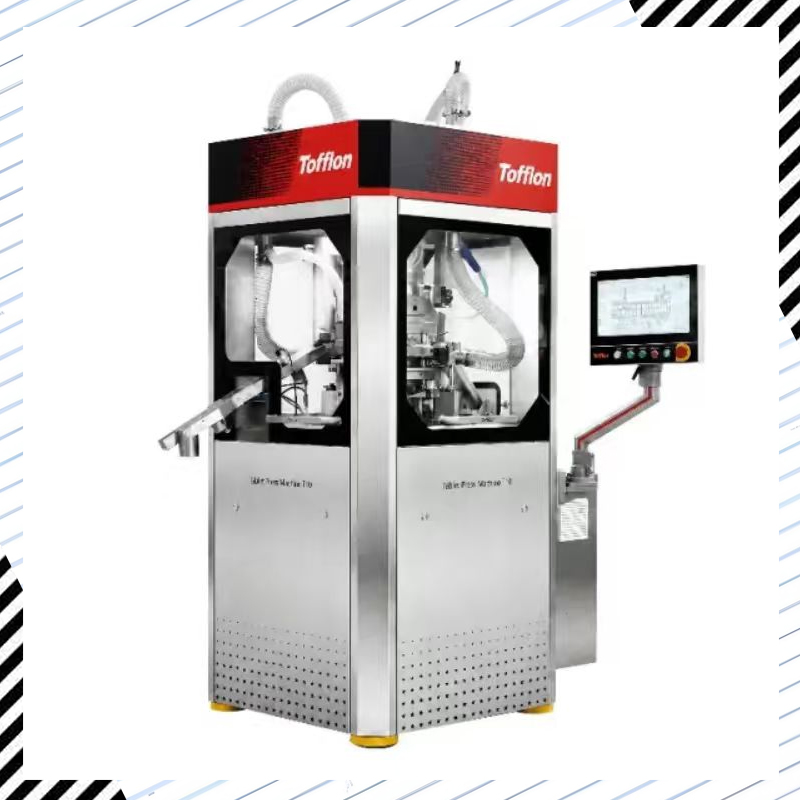
In the solid dosage form exhibition area, the T10 multi-functional tablet press showcased by Dongfulong is worth the attention of the food industry.
It is positioned for laboratory research and development and pilot-scale amplification. It belongs to the small equipment in the T series (T10/T20/T30), but it is not a simple laboratory tool. Instead, it is the core equipment for pharmaceutical companies to carry out prescription screening, process amplification, and small-batch commercial trial production.
T10 main technical parameters:
|
project |
Technical capabilities |
|
turntable |
Interchangeable design, 32/30/25/20 strokes and 8+8 double-layer configuration |
|
pressure |
Maximum main pressure 80kN, preload 30kN |
|
Production capacity |
The maximum capacity for a single-layer film is approximately 115,000 pieces per hour. |
|
Piece type |
Multi-layer tablets, irregularly shaped tablets, microcapsule tablets, effervescent tablets |
|
Specification |
Maximum diameter 25mm, maximum thickness 8.5mm |
|
Flexible configuration |
Optional WIP sealed water-washable version and OEB4 high-activity drug protection configuration |
The value of the T10 lies not only in its production capacity, but also in its adaptability to different types of products and processes . Based on a modular turntable structure, the equipment can quickly switch between different die specifications and tablet types, meeting the needs of parallel development of multiple formulations in the innovative drug R&D stage and small-batch commercial production of specialty formulations.
The equipment chain showcased by Dongfulong is also noteworthy: the ESI5 extrusion rounding machine, DGC1 fluidized bed, T10 tablet press, TPC40 tablet coating machine, and TCF420 microcapsule filling equipment, forming a continuous process combination from pellet core preparation to finished product processing. This is also the mainstream equipment solution for the pharmaceutical industry to achieve continuous manufacturing and industrialization of microcapsule sustained-release formulations.
What implications does this have for the food industry?
Today's food market is seeing a growing demand for smaller batches, more diverse products, and faster iterations , such as functional compressed candies, probiotic tablets, meal replacement products, pet nutrition tablets, and specialty nutritional foods.
In the past, food factories relied more on large-scale, single-variety production, but in the future, their competitiveness will increasingly depend on the speed of R&D and trial production, the efficiency of equipment upgrades, and the ability to iterate products .
Therefore, small, flexible equipment is not only a supplement to large production lines, but may also become an important infrastructure for food companies to develop new products, validate markets, and reduce trial-and-error costs.
III. Lishui Technology: Separation and Purification Technology Opens Up New Space for High Value-Added Food Ingredients
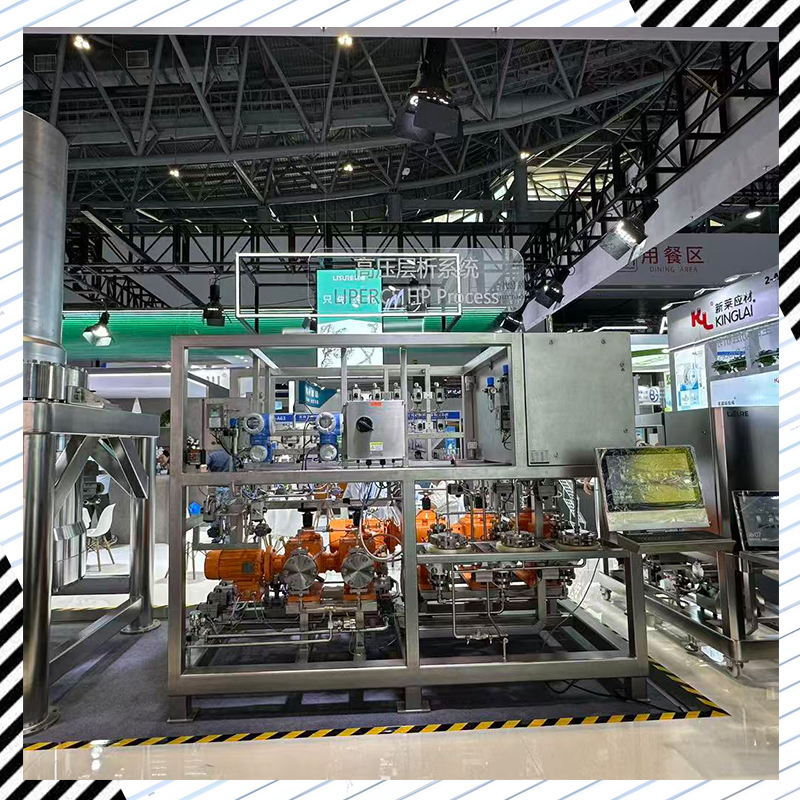
In the biopharmaceutical zone, Lissun Technology showcased its comprehensive downstream separation and purification solutions, offering significant cross-industry reference value. Compared to single equipment suppliers, Lissun provides process development, scale-up validation, chromatography media screening, equipment customization, and overall engineering design, covering the entire chain from filtration separation, chromatography purification, online solution preparation, and disposable solution preparation and storage. Lissun delivers complete purification engineering solutions from laboratory pilot-scale and pilot-scale production to commercial production.
The core hardware showcased includes the LIPERLA/LIPERCS high-pressure chromatography system and DAC dynamic axial compression columns , offering advantages such as high loading capacity, high yield, shorter purification cycles, and reduced solvent consumption. The LIPERCS version offers an optional explosion-proof configuration, and the control software complies with GAMP5 standards, meeting FDA 21 CFR Part 11 data integrity requirements and is suitable for commercial biopharmaceutical manufacturing under GMP conditions. In addition, the B Pilot 750 pilot-scale chromatography system, single-use flow path chromatography, ultrafiltration, multi-column tandem and parallel systems, and continuous flow chromatography products comprehensively cover the needs of all stages from process development and validation to large-scale production.
The value of this equipment system was further confirmed by the presentations from experts at the Lissoo booth. The current shift in biopharmaceuticals towards targeted conjugates and precision medicine, coupled with stringent engineering constraints on downstream purification processes, has allowed us to fully understand the underlying capabilities of this purification platform.
This system precisely corresponds to the intersection of targeted drug development and the precision medicine track of "personalized and disease-specific medication":
ADCs (antibody-drug conjugates) consist of an antibody, a linker, and a highly active cytotoxin. Downstream purification requires simultaneous control of free toxins, residual solvents and reagents, protein aggregates, naked antibodies, and components with non-compliant DAR (drug-antibody ratio) distribution. A mature industry process route is: UF/DF ultrafiltration to remove small molecule impurities → CEX/mixed mode/HIC chromatography for fine purification, with HIC used to narrow DAR distribution when necessary → secondary UF/DF concentration and buffer exchange → terminal sterile filtration. The separation resolution and recovery rate throughout the process directly determine whether the pipeline can pass process validation and advance to commercialization.
PDCs (peptide drug conjugates) and nucleopeptides face similar separation challenges: the longer the polypeptide chain and the more modifications, the more difficult it is to separate trace impurities such as missing sequences, epimers, and aggregates. The level of chromatographic separation directly determines the DAR distribution control effect of the conjugate product and the radiochemical purity index of the nucleopeptide.
The precision medicine model, represented by "personalized and disease-specific medication," places clear demands on pharmaceutical manufacturing: a wide variety of products, small batch sizes, frequent production line changes, and the inability to store intermediates for extended periods. The same production line needs to quickly switch between different products, strictly prevent residue and contamination between batches, and ensure stable reproducibility of process parameters. High-pressure chromatography's high throughput and short cycle time determine production turnover efficiency; disposable flow paths reduce the cleaning and validation pressure when changing products; and a robust data integrity system is a core prerequisite for products to meet GMP release requirements. Lisui packages hardware, media, process development, and compliance systems into a comprehensive solution, essentially providing a complete engineering support system for the industrialization of precision medicine drugs.
These purification challenges for high-end biopharmaceuticals may seem far removed from the food industry, but the underlying separation engineering logic is highly interconnected and also addresses the core pain points of the industrialization of high-value-added food ingredients.
From the perspective of the food industry, this type of technology has significant reference value. The core task of raw material separation is not only to obtain the target component, but also to efficiently separate impurities, residual reagents, and non-target components. High-efficiency chromatography, ultrafiltration systems, and a full-process data traceability system jointly determine product purity, yield, and production stability.
Looking at the food industry, plant-based active ingredients, functional peptides, high-purity sweeteners, and other high-value-added ingredients are facing highly similar engineering challenges:
- The target component and the impurity have similar structures, making separation difficult;
- The purification process can easily lead to the loss of effective active ingredients;
- When scaling up processes from the laboratory to industrial production, issues such as yield fluctuations and unstable batch consistency are common.
- High-value-added functional ingredients place continuous demands on upgrading the entire process of quality control and production traceability.
It is necessary to make an objective distinction between food and pharmaceuticals. There are significant differences in regulatory systems, process constraints, and quality acceptance standards. Purification technologies originating from the pharmaceutical field cannot be directly applied to food production scenarios and must undergo targeted food process verification and adaptation.
However, it can be clearly determined that as the food ingredient industry continues to upgrade towards higher purity, functionalization, and refinement , the mature separation and purification equipment, media systems, and engineering experience accumulated by the pharmaceutical industry will become indispensable technical resources for food ingredient companies to break through industrialization bottlenecks.
IV. FoodTechX Observation: Food Factory Construction is Entering an Era of Technological Integration
Based on this exhibition, we have three conclusions:
First, flexible manufacturing will become an important development direction for food factories. From R&D and pilot production to large-scale production, modular equipment and rapid changeover capabilities can help companies adapt to the market demand for multiple varieties and small batches.
Second, high value-added food ingredients will drive the upgrading of separation and purification technologies. Competition in the food industry is no longer just about raw materials and production capacity; extraction, separation, purification, and stable production capabilities will also become important competitive advantages.
Third, the upgrading of food processing equipment will gradually shift from "being able to produce and clean" to "process verification and quality traceability." Hygiene design, cleaning validation, and data management will become increasingly important engineering capabilities.
For FoodTechX, this exhibition has a deeper significance: the technologies and equipment needed for building food factories do not entirely come from the traditional food machinery industry. Pharmaceutical equipment, precision manufacturing, separation and purification, automation control, and hygiene engineering are all potential sources of new solutions for the food industry.
FoodTechX aims to integrate upstream and downstream enterprises, products, technologies, and engineering resources in the food industry chain, enabling food factory builders to discover technologies, find suppliers, and match equipment across industries, gradually forming procurement and engineering solutions from single equipment units to complete production lines. The exhibition may end, but technological integration will continue. The competitiveness of future food factories will come not only from innovation within the food industry itself, but also from the absorption and application of technological achievements from other advanced manufacturing fields.
This is precisely why we continue to focus on the global food equipment and industry supply chain.
(The photos accompanying this article were taken by the author at the CIPM exhibition at the Xiamen International Expo Center. The product information and parameters of Dongfulong and Lishui Technology in this article are based on publicly available information from the companies. For specific configurations, performance, and compliance statements, please refer to the latest official documents from the manufacturers.)