On July 31, a team of researchers from the National Center for Crop Genome Research of the Chinese Academy of Agricultural Sciences, in collaboration with domestic and international research institutions, uncovered the hybrid origin, tuber formation, and adaptive radiation of the potato clade of the Solanum genus. The study, a milestone breakthrough in the "High-Quality Potato Project," provides a new theoretical orientation for potato breeding and improvement. The study was published in *Cell*.

The cultivated potato is the world's most important tuber crop, which is used as staple food by 1.3 billion people worldwide. In comparison with other close relatives in the Solanum genus, all cultivated potatoes and their 107 wild relatives within the potato clade have in common a specialized organ—the tuber—for nutrient storage and asexual reproduction. However, the origins of potato species, the evolution of species diversity, and the genetic basis of tuberization traits remain poorly understood.
Taxonomically, the potato clade, the tomato clade, and the *Solanum bulbocastanos* clade are sister clades. From a morphological standpoint, potatoes and *Solanum bulbocastanos* are nearer; *Solanum bulbocastanos* was once believed to be the immediate ancestor of the potato, a potato that does not form tubers. Molecular evolutionary analysis places tomatoes and potatoes as being more closely related, and their evolutionary relationship remains an enigma.
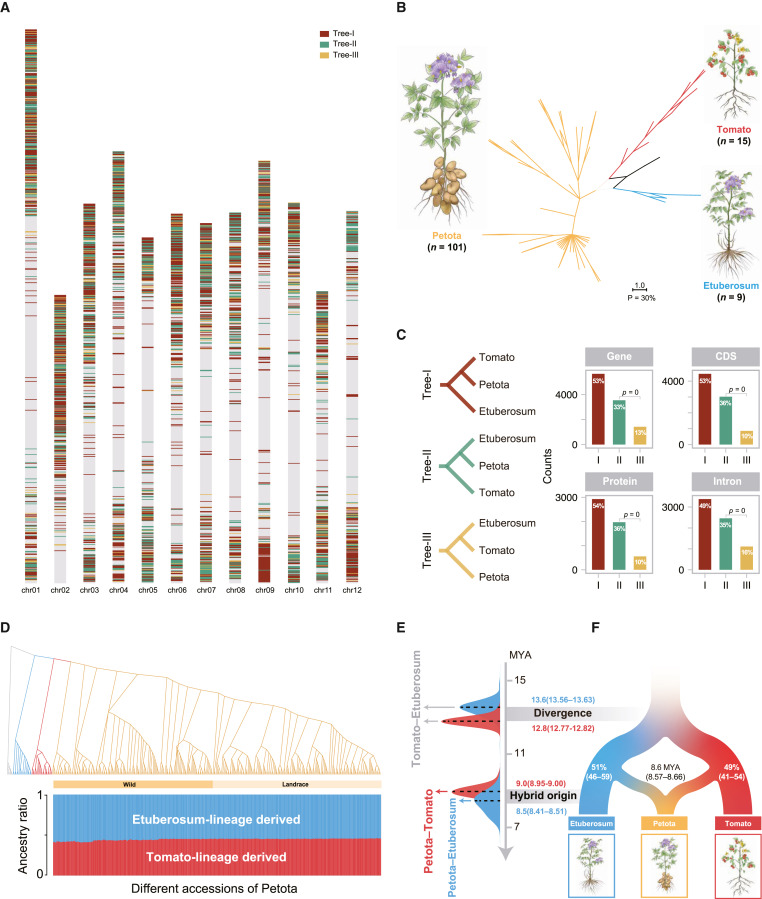
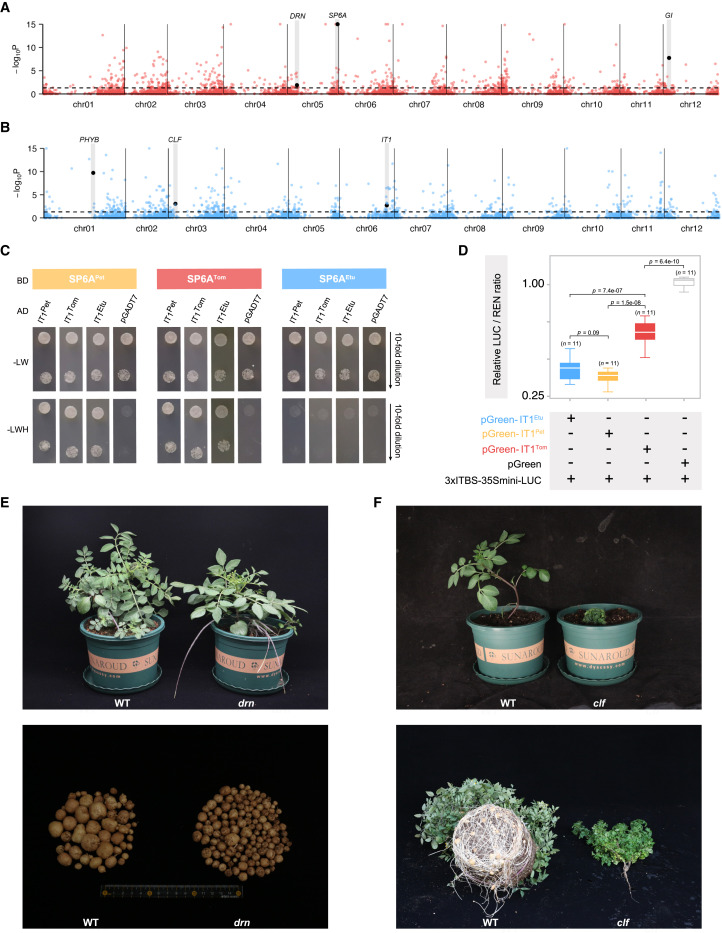
By integrating approaches like evolutionary genomics and molecular biology, the researchers revealed that the potato clade was formed by an ancient hybridization between the tomato clade and the *Solanum bulbocastanos* clade 9 million years ago. The formation of the new organ, the tuber, resulted from recombination and interaction of alleles from the two parental species. For example, the IT1 tuber identity gene is derived from the *Solanum bulbocastanos* group, and the SP6A tuber-forming signal factor is derived from the tomato group. Two important genes for tuber function, DRN and CLF, were also identified recently.
The study also found that the genetic composition within the potato group still exhibits a mosaic pattern of alleles from the different parental species in approximately 24%, reflecting random fixation of parental alleles. This "mosaic" blend of genetics also facilitated the explosive diversification of potato species, generating reproductive isolation from their parental species, as well as increased hybrid vigor and adaptability.
This research is the first to demonstrate that interspecific hybridization has the ability to generate new organs (tubers), enriching evolutionary theory and providing a novel approach for potato breeding and improvement.
This research was supported by the National Natural Science Foundation of China, Guangdong Provincial Major Basic and Applied Basic Research Project, and the Science and Technology Innovation Project of the Chinese Academy of Agricultural Sciences.