Published in: FoodTechX · Technology
Simultaneous push notification: Official WeChat account of Boyuan Information Technology (Guangzhou) Co., Ltd.
Target audience: Global food factory purchasing decision-makers, technical directors, and factory construction consultants (China, Southeast Asia, Middle East, Africa, Central Asia, South America, Oceania)
I. Introduction: Grasping the Technological Pulse of a Trillion-Dollar Market Amidst Fierce Competition
The evolution of beverage packaging technology is essentially a battle between "flavor preservation" and "production efficiency." In the 1990s, PET bottle hot-fill technology quickly captured the market for tea beverages, fruit juice beverages, and other products thanks to its mature process and relatively low equipment costs. However, the loss of flavor, damage to nutrients, and increased weight of packaging materials caused by high-temperature processing have always been bottlenecks that the industry has struggled to overcome.
In the 21st century, with the explosive growth in consumer demand for natural, healthy, and additive-free beverages, blow-fill-screw aseptic cold-fill technology emerged. This revolutionary technology, which integrates the three major processes of bottle blowing, filling, and capping in a sterile environment, not only completely solves the flavor defects of hot filling but also ushers in a new era of "lightweight, low-carbon, and flexible" beverage industry.
Today's market landscape has undergone profound changes. Looking globally, from international giants like Krones and Sidel, to domestic leaders like TECH-LONG, New Amlogic, and Lehui International, and numerous regional specialized manufacturers, more than ten companies now possess the capability to supply complete aseptic blow-fill-seal production lines, making market competition unprecedentedly fierce. However, behind this enormous challenge lies an even greater opportunity—many beverage manufacturers still use traditional high-temperature filling processes. With consumption upgrades and increasingly stringent regulations, these companies are facing an urgent need to upgrade their production lines, creating a vast market space for shifting from high-temperature filling to aseptic filling.
This article does not intend to cover everything. Ultra-clean filling solutions in Zhangjiagang, aseptic carton packaging from Tetra Pak and Bihai, linear small-scale aseptic projects from Zhongya Group, aseptic aluminum can lines, aseptic bag filling systems, and small-scale aseptic lines or equipment leasing models in Guangzhou and Zhuhai that have not yet achieved large-scale production are all outside the scope of this discussion. Furthermore, HPP (High Pressure Processing) technology, due to its significant differences from the BFC (Body Fusion) approach in its sterilization principle, application scope, and production capacity, will not be compared here.
This is the first in a three-part series on Aseptic Blow-Fill-Cuff (BFC) technology , focusing on answering a core question: Among numerous technical approaches, why is Aseptic Blow-Fill-Cuff (BFC) the optimal solution for large-scale industrial production? Wherein lies its technological advancement?
- Foresight : As this article is being written, numerous potentially revolutionary next-generation aseptic technologies are emerging at major exhibitions and laboratories worldwide. These technologies may reshape the industry landscape in the next 5-10 years, but for now, BFC technology remains the mainstream choice that has been extensively validated and offers the best cost-effectiveness and reliability.
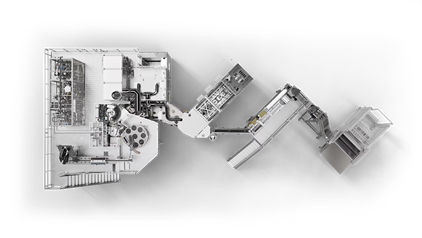
II. Technology Comparison: Why Aseptic Cold Filling Has Become a "Mandatory Option"
2.1 The essential difference from traditional hot filling
|
Dimension |
Hot |
Hot Fill (Heat-set PET, 85–92℃ ) for Crystallization Port Heat-Fill PET Bottles |
Aseptic BFC Cold Fill |
|
Filling temperature. |
85–92℃ |
85–92℃ |
Normal temperature Ambient (≤30℃) |
|
Flavor Retention |
Approximately 50–70% |
Approximately 55–75% |
≥90 % |
|
Vitamin Retention |
Significantly reduced ↓↓ |
Moderate loss ↓ |
Nearly 95 % intact |
|
Preservative Needed |
Yes |
Some product categories require the addition of "Sometimes". |
No |
|
Preform Weight (500ml) |
28–36g |
26–30g |
16–22g (40–50% lighter ) |
|
Relative Energy Consumption |
100% (benchmark) |
~95% |
Approximately 60–70 % |
|
Applicable Products |
Mainly acidic tea/fruit juice |
Tea/Juice/Some Energy Drinks |
Full spectrum (acidic/neutral/gas-containing/particulate-containing ) |
- Note : PE (polyethylene) and PP (polypropylene) bottles can also be used for hot filling (85–92℃); heat-set PET bottles with crystallization ferrules undergo biaxial stretching heat treatment to withstand filling at 85–92℃ without significant shrinkage. Hot-filled products can also pass global food safety audits (such as FSSC22000/ISO22000/HACCP). The core difference of aseptic cold filling lies in flavor preservation, nutrient retention, lightweight packaging, and product flexibility , which is the fundamental reason why the high-end beverage market chooses the aseptic route.
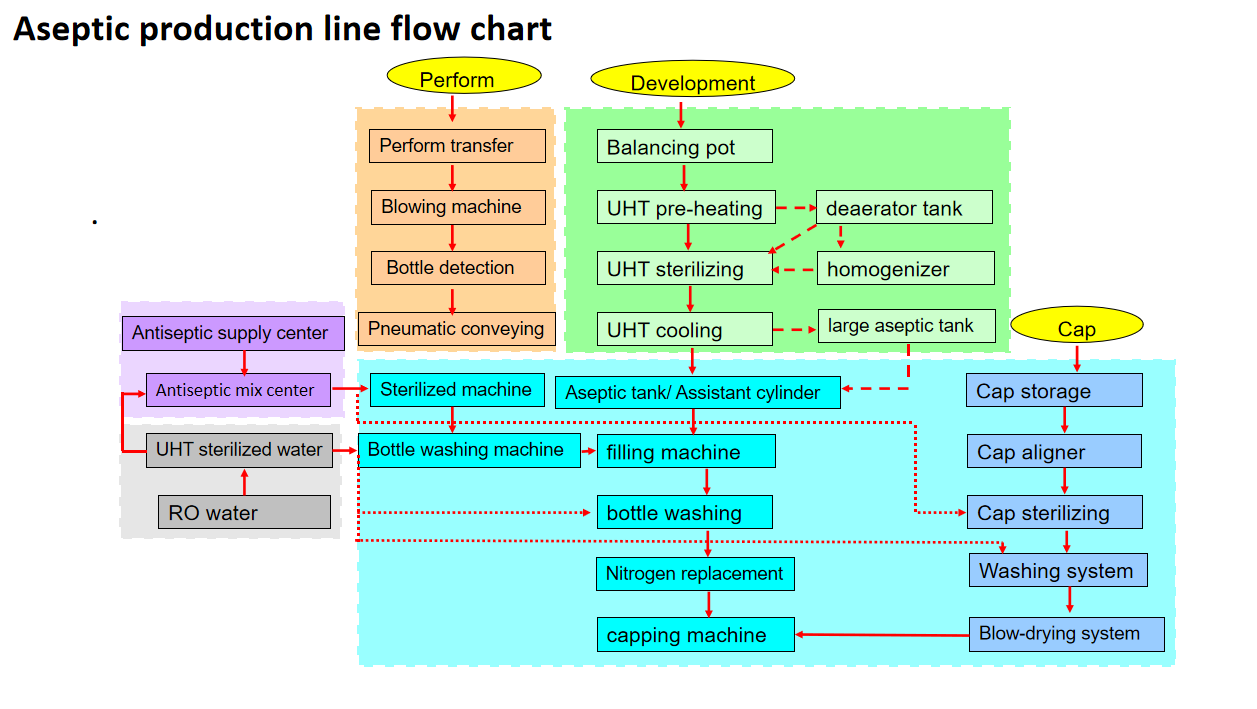
2.2 In-depth analysis of the three core advantages
① Flavor Revolution – The “Original Flavor” Clean Label
Ambient temperature filling allows heat-sensitive products (NFC juice, plant protein drinks, functional beverages) to retain their original flavor. Aseptic cold-filled NFC juice has a sensory evaluation that is more than 30% higher than that of hot-filled juice, which aligns with the global trend of additive-free consumption.
② Nutritional protection
By avoiding prolonged high-temperature heating, the retention rate of vitamin C and B vitamins has increased from less than 70% in hot-filled products to over 95%.
③ Green Manufacturing – A Win-Win Situation for ESG and Costs
PET bottles are 40-50% lighter, and a production line with an annual output of 100 million bottles can save 200-300 tons of PET raw materials annually; energy consumption is reduced by 30-40%. This is a significant competitive advantage for exports to the EU (CBAM) or Australian markets.
2.3 Solutions to the Three Pain Points of Concern to the Purchaser
|
Procurement pain points |
Aseptic cold filling solution |
|
Quality Premium : How to Enter the High-End Market? |
Supports NFC juices, plant-based protein drinks (soy milk/oat milk/coconut milk), and low-acid tea beverages—hot filling cannot guarantee this quality. |
|
Packaging and Carbon Costs : How to Reduce Costs and Meet ESG Standards? |
PET bottles are 40-50% lighter, saving raw materials annually and reducing carbon footprint. |
|
Product flexibility : How to handle multiple SKUs? |
The BFC unit can switch between acidic (pH 2.5–4.6) and low-acid (pH > 4.6) states, and is compatible with both carbonated and non-carbonated states. |
III. Global Technology Landscape: Differentiated Competition Among Leading Companies
3.1 International Giants: Technology Leaders
Krones - Contipure AseptBloc Aseptic Blow-Fill-Switch System
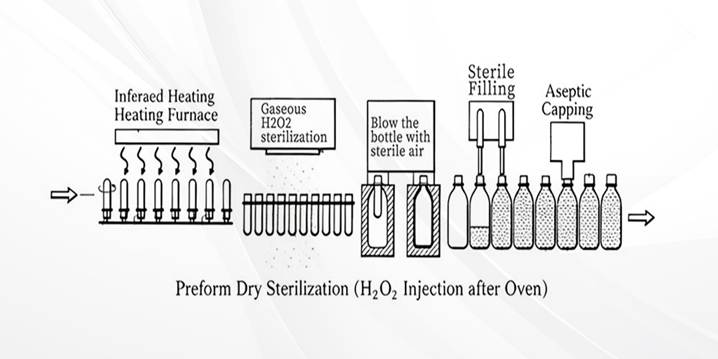
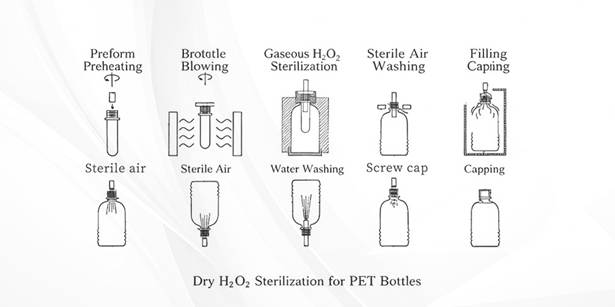
- Core technology: Dry H₂O₂ preform atomization + PAA wet bottle cap sterilization
- Production capacity range: 8,000–72,000 BPH (maximum 60,000–72,000 BPH for aseptic lines)
- Aseptic running time: 120–168 hours for neutral products.
- ⚠️ Krones Contiform blow molding machines and ErgoBloc L (non-sterile water/carbonated line) can reach 81,000–100,000 BPH, which is different from the sterile BFC line and should not be confused.
- Representative examples: Nestlé and Danone's multiple global factories

Sidel — Predis™ + Aseptic Combi
- Core technology: Predis dry preform sterilization (H₂O₂ steam), no rinsing required.
- Production capacity: 8,000–72,000 BPH (the mainstream upper limit for aseptic lines)
- Aseptic runtime: ≥120 hours in neutral conditions; FDA 3-A certified.
3.2 Domestic Strength: Rising Challengers
Tech-Long
- Core technology: Aseptic chamber + H₂O₂ spray dry sterilization / PAA wet sterilization dual-pathway option
- Production capacity range: 8,000–54,000 BPH
- Aseptic running time: Neutral products validated ≥72h (some up to 120h); Acidic products validated ≥72h (Source: DyLon's publicly available validation report)
- Competitive advantages: Excellent cost performance, complete production line solutions (including pretreatment, labeling, and packaging), and fast after-sales response.
Newamstar
- Core technology: H₂O₂ dry process preform + PAA wet process cap for dual protection
- Production capacity: 12,000–48,000 BPH
- Applicable Products: High-acid and low-acid (neutral) products, aseptic filling of some carbonated beverages (Newamstar's official website explicitly states that it can provide aseptic filling services for acidic and neutral protein beverages).
- Innovation direction: Intelligent operation and maintenance monitoring
Lehui International
- Focus: Customized aseptic solutions for beer, dairy products, and high-viscosity/high-protein materials
3.3 Technical Level Measurement Standards (Seven-Dimensional Evaluation Model)
|
# |
Dimension |
Qualification Standard |
Excellent level (imported/high-end domestic) |
|
1 |
Commercial Sterility Assurance Level (SAL) |
≤10⁻⁶ |
≤10⁻⁶ (Verified by a third-party challenge test) |
|
2 |
Continuous aseptic running time |
Acidic ≥72h; Neutral ≥72h |
Neutral pH ≥120h (imported pH up to 168h ) |
|
3 |
pH/Viscosity adaptability range |
pH 2.5–7.0; low viscosity |
pH 2.5–7.5; contains particles ≤6mm |
|
4 |
Bottle shape flexibility |
Compatible with PCO1881 and 38mm double-ended threads; 150ml–1250ml (compatibility with Chinese models is an advantage). |
Same as above |
|
5 |
Changeover |
≤120 min |
≤60–90 min (servo drive) |
|
6 |
Design life |
≥15 years |
≥15–20 years |
|
7 |
Digital Interface |
Basic IoT |
MES/digital twin ready; supports automated dummy cup sterility testing. |
IV. Core of Aseptic Technology: The Science and Selection of Sterilization Methods
4.1 Mainstream Packaging Material Sterilization Technologies
- H₂O₂ dry process (atomization/vaporization) : Log Reduction ≥6, no flushing wastewater, residue ≤0.5 mg/L (GB 5009.226), preferred in strict environmental protection areas of Europe/Australia.
- PAA wet process (spraying/soaking) : broad-spectrum, effective against spores, produces 50-100L of PAA-containing waste liquid per 10,000 bottles, requiring a PAA recycling system.
4.2 Recommended aseptic preparation based on product type
|
Product Category |
pH range |
Aseptic difficulty |
Recommended BFC configuration |
|
carbonated beverages |
2.5–4.0 |
★★ |
Basic aseptic + PAA or H₂O₂ cap |
|
Pure fruit juice (NFC) |
3.0–4.5 |
★★★ |
Standard BFC + H₂O₂ dry process preform |
|
Tea beverages (neutral) |
5.5–7.0 |
★★★★ |
Enhanced aseptic protection + strengthened CIP |
|
Plant-based protein (soy milk/oatmeal/coconut ) |
6.5–7.5 |
★★★★★ |
Top-tier BFC + H₂O₂ dry method + CIP optimization + neutral 72h verification |
|
Dairy products (ESL/PET sterile milk) |
6.6–6.9 |
Extremely high |
Highest level BFC+ regular culture medium challenge validation |
- Key Insight : Neutral protein beverages (soy milk/oat milk/walnut milk) are the "litmus test" of aseptic technology—proteins are prone to scaling, and a neutral environment is conducive to spore growth. The CIP alkali concentration (1–3% NaOH) and temperature (≤75℃ to protect the passivation layer) must be clearly specified in the technical agreement.
V. Interdisciplinary Systems Engineering: From "Single-Point Breakthrough" to "System Collaboration"
A successful aseptic production line is not simply a collection of equipment, but a deep integration of eight disciplines: mechanical manufacturing, automation, food science, microbiology, chemistry, materials science, environmental engineering, and information science.
Four major aseptic control procedures:
① Material sterility : UHT (135–145℃, 2–5s) + sterile buffer tank
② Packaging material sterilization : preform (H₂O₂/PAA) + cap sterilization + sterile air purging
③ Sterile environment : ISO Class 5 (100-level) positive pressure + HEPA + H₂O₂ steam fumigation
④ Equipment sterility : CIP/SIP + sterile valve assembly + dynamic seal
CIP key parameters:
- NaOH 1–3%, ≤75℃ (>80℃ damages the passivation layer and causes a metallic taste); HNO₃ 0.5–1.5%; final disinfection
- Reynolds number > 4000 ensures turbulent scouring dead zones; neutral proteins → short cycles, acidic → cycles can be appropriately extended.
VI. The Evolution of Smart Factories: Digital Twins, MES, and Predictive Maintenance
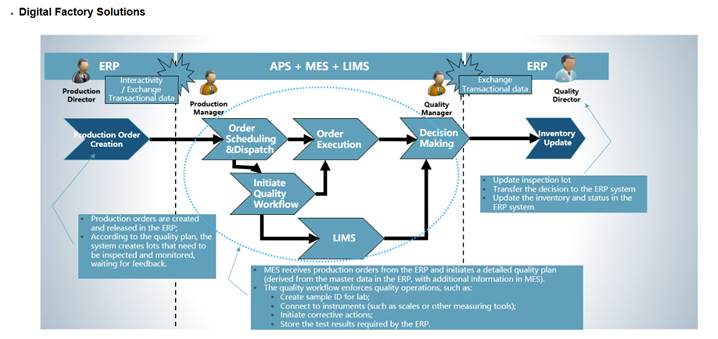
- Digital Twin : Input formula physicochemical parameters → Simulate UHT–BFC temperature/pressure/residence time to predict sterilization effect and filling stability, shortening new product introduction time by 30–50%; Virtual Commissioning reduces on-site errors.
- MES Integration : Real-time uploading of filling valve accuracy, aseptic zone pressure differential, H₂O₂ concentration, and CIP stages → batch traceability (meets FDA 21 CFR Part 11 and BRCGS standards)
- Predictive Maintenance (PdM) : Vibration/temperature/current monitoring of blow molding die holders, filling valves, and main drive motors; AI-based wear prediction; unplanned downtime reduced by 60–85%.
- The vision for a fully automated factory : BFC must possess the capabilities for automated COP/SOP, automated dummy cup aseptic testing, remote diagnostics, and open ISA-95 data sharing.
VII. Future Outlook: Finding Blue Ocean Opportunities Amidst Red Ocean Competition
7.1 Technological Trends and Potential Changes
- Technology trends : widespread adoption of digital twins, extreme servo flexibility (changeover time < 60 minutes), zero-emission PAA recycling, and rPET ≥ 50% compatibility.
- Potential Revolutionary Technologies : At the time of writing, numerous potentially revolutionary next-generation aseptic technologies are emerging at major global trade shows and laboratories. These technologies may reshape the industry landscape in the next 5-10 years, but for now, BFC technology remains the mainstream choice that has been extensively validated and offers the best cost-effectiveness and reliability. When planning production lines, buyers should consider both current mature technologies and future upgrade potential.
7.2 Market Opportunities for Small-Capacity Flexible Production Lines
Recommendation for small-capacity flexible lines : Currently, the smallest commercial-grade BFC for mainstream domestic production is 8,000 BPH (mainstream starts from 12,000 BPH). Small and medium-sized brands in Southeast Asia, the Middle East, Africa, and South America are showing increasing demand for compact flexible BFCs with capacities of 6,000–12,000 BPH. Equipment manufacturers are advised to pay attention to developing this blue ocean market .
7.3 Market Structure and Competitive Landscape
- Competition is fierce, but the market is huge : As mentioned earlier, there are already more than ten companies, both domestic and international, with complete BFC (Body-Fueled Filling) production line capabilities, leading to intense competition. However, at the same time, a large number of traditional high-temperature filling production lines urgently need upgrading, and market demand remains far from being met.
- The trend of domestic substitution : The industry generally expects that the market share of domestically produced aseptic lines will continue to increase significantly, gradually achieving widespread substitution for imported equipment; the cost-effectiveness advantage of Chinese manufacturing will become more prominent in emerging markets.
Conclusion
Choosing a sterile production line technology route is essentially choosing a company's future product positioning and competitive landscape. Aseptic blow-fill-swirl (BFC) technology, with its comprehensive advantages in flavor, nutrition, cost, and flexibility, has become an inevitable choice for large-scale industrial production. However, decision-makers must also be keenly aware of the intensity of market competition and the uncertainty of new technology iterations.
This article is the first in a three-part series on aseptic blow-fill-swirl (BFC) technology.
- Next article: Standards and Acceptance – Global Standards System and Practical Guide to Acceptance of Aseptic Blow-Fill-Switch Production Lines (GB/T 41124-2021 & T/CLIMA & ISO)
- Next article: Investment Decision-Making Guide – A Guide to Avoiding Pitfalls in CAPEX/OPEX for Multi-Million-Dollar Aseptic Production Lines and the Evolution of Smart Factories.
This article was produced by the FoodTechX Technology Research Center. Please contact us for authorization to reprint.
Data and viewpoints are sourced from publicly available technical information on company websites, industry journal articles, and interviews with offline equipment manufacturers and end-users. If you have any questions about the data or viewpoints in this article, please contact the editorial department at www.foodtechx.com for verification.
© Boyuan Information Technology (Guangzhou) Co., Ltd. | www.foodtechx.com