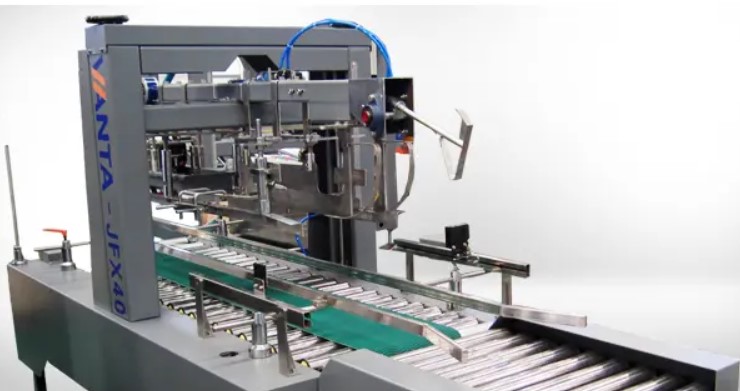
The food packaging equipment market is undergoing a dynamic transformation, driven by automation, sustainability demands, and evolving consumer preferences. Valued at USD 16.31 billion in 2024, the market is projected to reach USD 20.4 billion by 2031, growing at a CAGR of 3.3%. Innovations like generative AI, IoT-enabled systems, and eco-friendly packaging solutions are reshaping how food is packaged, ensuring safety, efficiency, and reduced environmental impact. This article explores the latest advancements, their implications, and the challenges facing the industry.

Market Trends and Growth Drivers
The surge in demand for packaged foods, particularly in the bakery, dairy, and ready-to-eat sectors, is fueling the adoption of advanced packaging equipment. Automation is a key driver, with high-speed systems like form-fill-seal and cartoning machines reducing labor costs and improving throughput. The rise of e-commerce and consumer demand for convenience have also spurred innovations in single-serve and smart packaging, such as self-venting trays and resealable designs, which cater to Gen Z and Millennials.

Sustainability is another major force. Regulatory pressures in Europe and North America are pushing manufacturers to adopt biodegradable and recyclable packaging materials. Equipment compatible with these materials, such as Bosch Packaging Technology’s eco-friendly systems, is gaining traction. Additionally, the labor shortage in food manufacturing has accelerated the shift toward robotic automation and digital monitoring systems, enhancing productivity and minimizing errors.

Technological Advancements
Generative AI is revolutionizing packaging design by enabling data-driven, automated processes that optimize material usage and structural integrity. For example, AI-powered simulation tools allow manufacturers to test packaging designs in real time, reducing development time and waste. Companies like MULTIVAC and IMA Group are integrating AI and IoT into packaging lines, enabling real-time freshness tracking through sensors and time-temperature indicators. These smart packaging systems monitor conditions like temperature and humidity, ensuring product safety and reducing spoilage.

Robotic automation is also transforming packaging operations. High-speed robotic arms handle tasks like sorting, filling, and sealing with precision, minimizing human intervention. The 2024 PMMI State of the Industry Report highlights the role of inspection and testing equipment in ensuring quality standards, with advanced cameras and sensors detecting defects in real time. These technologies are particularly impactful in the bakery sector, where demand for sustainable packaging is driving equipment upgrades.
Regional Dynamics
Europe is projected to experience the fastest growth in the packaging equipment market, driven by strong regulatory support for sustainable innovation and demand for packaged food and beverages. The Asia-Pacific region, particularly China and India, is also a key market due to urbanization and rising consumer spending on packaged goods. North America remains a leader in adopting AI-driven and automated packaging systems, supported by a robust food tech ecosystem.
Challenges and Critical Analysis
High initial costs for AI-integrated and automated packaging equipment pose a barrier for SMEs, potentially leading to market consolidation favoring large players like GEA Group and Bosch. Cybersecurity risks are another concern, as IoT-enabled systems are vulnerable to hacking, which could disrupt operations or compromise food safety. Additionally, the push for sustainable packaging materials requires significant R&D investment, which may not be immediately cost-effective for all manufacturers.
Critically, the industry must address consumer skepticism about over-packaging. While smart packaging enhances freshness and safety, excessive use of materials can alienate environmentally conscious consumers. Manufacturers need to balance functionality with minimalism to align with trends like zero-waste packaging and upcycled materials.
Future Outlook
By 2032, the food packaging equipment market will likely see increased adoption of AI-driven design tools and sustainable materials. Innovations like 3D-printed packaging and biodegradable films will gain prominence, driven by consumer and regulatory pressures. The integration of blockchain for traceability could further enhance consumer trust. Manufacturers must focus on modular, scalable equipment to cater to diverse product types and market demands.