2026
2026


Product description
Temperature of heat air is according to the materials’requests, set the automatic control scope of temperature and humidity;Hot air circulates in the box, high thermal efficiency, energy conservation;
The whole machine has the advantages of small noise, stable operation, automatic temperature and humidity control. convenient installation and maintenance:
The trolley can be placed in the form of pallet or hanging type, and the hanging plate can disassemble the push plate.
Dehydrated vegetables, also known as rehydrated vegetables, are fresh vegetables that have been washed and dried to remove most of their water content. This process preserves the original color and nutritional content of the vegetables. Dehydrated vegetables are easy to store and transport, and can effectively adjust the peak and off-peak seasons for vegetable production. Compared to other fresh vegetables, dehydrated vegetables are smaller and lighter, rehydrate upon rehydration, and are easier to transport and consume.
Air-source heat pump dryers offer energy-saving and environmental protection, high efficiency, low energy consumption, intelligent temperature and humidity control, manual operation throughout the entire process, time-saving and labor-saving, unaffected by seasonality or weather, and continuous production. They maximize the preservation of the original flavor, color, and nutrients of the vegetables, resulting in a finished product with a beautiful color and intact nutrients, and a delicious and fresh taste. Their high degree of automation, closed-loop operation, wide adjustment range, and adaptability to a wide range of products make them an ideal choice for dehydrated vegetable drying equipment.
Air-Powered Vegetable Drying Process Reference:
1. Raw Material Selection: Choose vegetables with abundant flesh. Before dehydration, carefully select the best and discard any that are diseased, insect-infested, rotten, or shrunken. Ideally, the vegetables should be 80% mature; overripe or underripe ones should also be removed. Except for melons, which have been seeded and pulped, other types of vegetables can be rinsed with clean water and then dried in a cool, dry place, but not in direct sunlight.
2. Cutting and Blanching: Cut the washed vegetables into slices, shreds, or strips according to product requirements. Pre-cooking varies depending on the ingredient. Easy-to-cook vegetables should be blanched in boiling water until cooked through, while those that are difficult to cook through should be briefly boiled in boiling water (usually above 150°C). The blanching time is generally 2-4 minutes. Leafy vegetables are best left unblanched.
3. Cooling and Draining: After pre-cooking, vegetables should be cooled immediately to room temperature. After cooling, to shorten drying time, the vegetables can be centrifuged to remove water or manually squeezed. Once the water has drained, they can be spread out to dry briefly before being plated and baked.
4. Drying: The drying temperature, time, color, and moisture content should be determined based on the variety. Drying is carried out in a drying room. Spread the vegetables evenly on baking trays, then place them on drying racks and push them into the air-energy heat pump drying room. The drying room temperature is maintained at around 50°C, and the drying time is generally about 5 hours.
5. Sorting and Packaging: Once the dehydrated vegetables have been inspected and found to meet the requirements of the Food Hygiene Law, they can be packaged in plastic bags, sealed, and boxed for market release.
Applicable scope
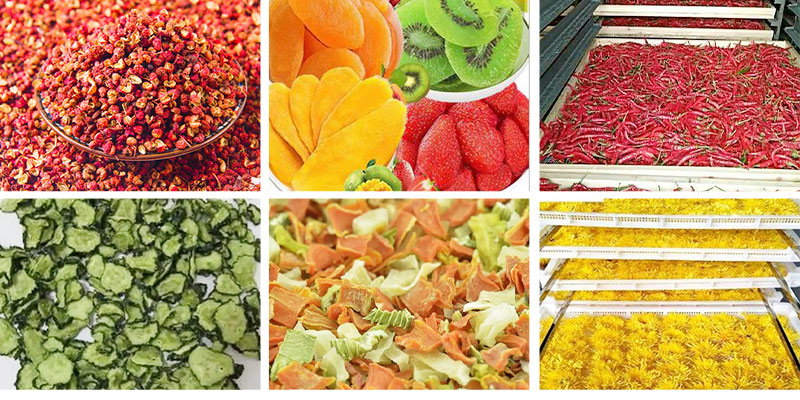
Green Tea, stevia, mint, spinach, coriander, celery, cabbage, eggplant, beans, rape, lettuce, cauliflower, leek, cucumber, peas, lentils, peanut, sesame, black beans, corn, beans, red bean, mung
bean, hemp seed, flaxseed, durian, wax apple, Golden heart fruit, sharp Camilla,coconut, Hawaii fruit, egg yolk fruit, oil pear, rambutan, Annona, passion fruit, lemon, papaya, green orange, longan,
pomegranate, mango, banana, pineapple, jackfruit, carambola,granadilla, pitaya, jujube, litchi, Taiwan jujube, pipa, thorn pear, grapefruit, oranges, dates, red dates, grape, apple, pear, peach,
plum, apricot, persimmon, hawthorn, strawberry, cherry, mushroom, agaric, tremella, Ganoderma lucidum, cinnamon, pepper, fennel, clove, turmeric, lily, cassava, yam, taro, Pinellia ternata,pinellia,
crosne(Stachys sieboldii), ginger, onion, garlic, white radish, carrots, bamboo shoots, lotus root, water bamboo, water chestnuts, etc.