2026
2026

Packaging robots deliver high performance and high quality
No sooner said than done. With the support of KUKA, the system model was replicated and optimized at Peasedown St. John, Bath at Active8 Robots. The two KR AGILUS HM were equipped with rotating end-of-arm tools made of food-safe stainless steel to meet the strict hygiene regulations. Michael Payne, Food and Beverage Sector Manager at KUKA UK, emphasizes the advantages of this robot in regard to this application area of the sandwich industry: "Thanks to the integrated energy supply system, the KR AGILUS HM achieves the highest precision and also requires very little space due to its compact design". This makes it the ideal robot for meeting the challenges of handling generously filled slices of white bread.

Because: "The sandwiches must not be squashed or slip during the process," adds Michael Codd from Active8. After all, the lunch snack should not only taste good, but also look appetizing. This requires a repeatability of the movements in always the same strength when gripping. Only a robot can offer this - human beings can’t.
Best of Packaging thanks to Robotics: Machine checks quality with image sensors
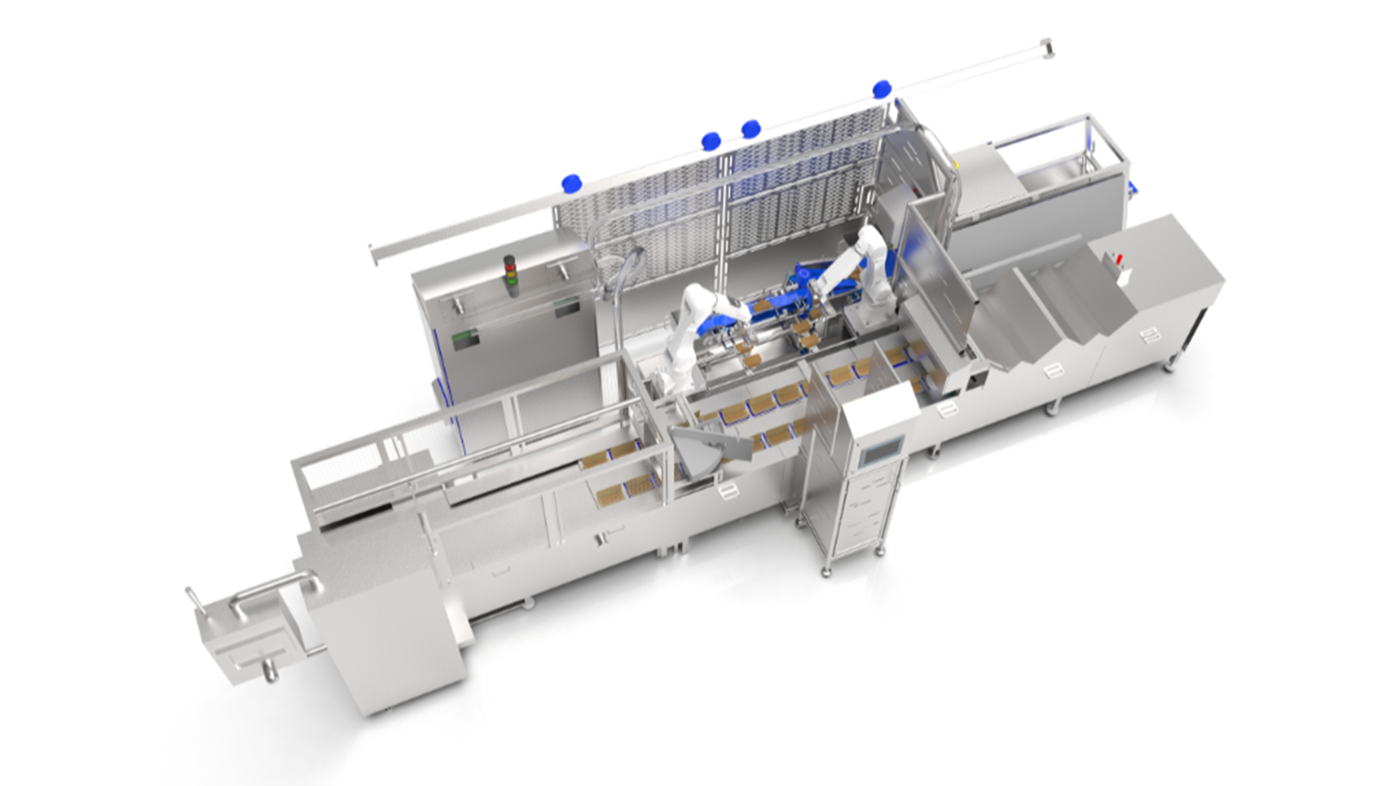
This is how the robotic cell works: the square toasts spread by humans arrive on a con-veyor belt. Before they arrive at the two KR AGILUS HM, the sandwiches are cut with ultrasound. Image sensors integrated into the system check the quality. "We check automatically whether the cut is good and the sandwich is still in shape," explains Michael Codd. If one of the sandwiches fails this quality check, it is immediately sorted out. The other sandwiches, now triangular, continue on the conveyor belt to the gripper arms of the KR AGILUS HM. These pick up the sandwiches, turn them 180 degrees and place them individually in paper bags provided for this purpose. Ready for lunch break.

Innovative packaging solution for more productivity and food safety
The two KR AGILUS HM can pack between 50 and 60 sandwiches per minute, and the robust design of the six-axis robot ensures continuous work sequences. "Thanks to lifetime lubrication on the gears, the KR AGILUS HM manages completely without lubricant changes and with very little maintenance," explains Michael Payne from KUKA. The investment pays off for companies after a short time: thanks to the stable productivity, which can be increased, for example, by adding further systems, the lower costs due to the elimination of manual work, and the high product quality, a return on investment (ROI) is possible after about 16 months, depending on the size and effectiveness of the company. The material for packing sandwiches might vary, it's also possible to use bags made of plastic, jars, or boxes. And companies may not only invest in the automation of packaging, but also add other robotic solutions, for example in case packing, palletizing or food storage.
Packaging robot can be used in many ways
Currently, the first robotic packaging system for food from Active8 is still waiting for its first commissioning in a large bakery. However, Michael Codd is already thinking about possible extensions for this application. In order to support the sandwich industry as well as food safety even more, the first part of the process – preparing the sandwich - could also be automated in the future. This could be done by delta robots such as KUKA's KR DELTA, which was designed for direct contact with food, pick-and-place and food handling. It could be integrated into the existing system. Last but not least, robotic packaging does not only work for sandwiches: Active8 Robots sees numerous areas of application for similar systems that could package snacks or other food hygienically, quickly and cost-effectively, or even completely prepare them.