2026
2026


Economic and non-contact angle measurement and position detection
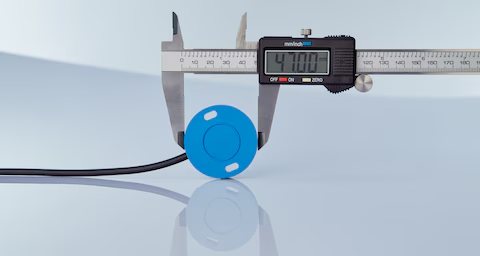
The MAS magnetic angle sensor is an especially economical solution for angle measurement and position detection. Its space-saving, two-part design consisting of magnet and sensor ensures high flexibility in use. The MAS measurement principle is based on the so-called Hall effect and enables non-contact and thus wear-free angle detection. This prevents faults and minimizes service work. Thanks to IO-Link, the sensor is easy to configure and can be monitored proactively via diagnostic data.
Advantages
High cost efficiency without compromising performance
The quick and simple installation of the MAS alone reduces costs in everyday work processes. Thanks to IO-Link, sensor configuration is particularly efficient. Settings of existing sensors can also be transmitted to a new device in seconds via IO-Link. Thanks to the non-contact principle of operation, the MAS is wear-free, which significantly reduces maintenance costs. High installation tolerances also ensure particularly easy sensor handling and smooth operation. This ensures consistently high performance, even under demanding conditions.
Long service life thanks to wear-free principle
The MAS consists of two main components: Sensor and magnet. The sensor features a completely sealed housing and is thus protected from harsh ambient conditions. Since the measurement principle is based on the magnetic Hall effect, the MAS works permanently and reliably without making contact at a working distance of up to 4 mm. This means that the sensor has no parts that wear out during use and have to be replaced regularly. This reduces downtime and extends the service life of the entire sensor technology. Thanks to the integrated diagnostic functions, abnormalities can be detected, monitored and proactively eliminated in real time.
High flexibility in application and customized solutions
The MAS is designed for use in numerous applications. For example, in the machine tool industry for controlling CAM shafts in tool changers. In input control for replacing mechanical limit switches that can wear out. Or in industrial automation and robotics, where precisely monitoring rotational movements is required. The rugged design of the sensor, combined with its high offset tolerance, means it can be used in a wide range of demanding industrial environments. The sensor can be adapted to the specific requirements of the application via IO-Link.
Customized device variants can be easily created on request.